

Gear Review: NEMO Eclipse Vs. Exped Ultra
Posted by Derek Newman on 21st Apr 2026
The NEMO Eclipse and the Exped Ultra 6.5R are two of the best insulated sleeping pads available for backcountry camping right now. The Eclipse wins on comfort: its 4-inch loft and contoured Spaceframe baffles make it the better choice for side sleepers and anyone prioritizing a genuinely restful night. The Exped Ultra wins on warmth, weight in the mummy configuration, versatility, and packed size, making it the stronger tool for serious cold-weather objectives. If you are a three-season backpacker who sleeps on their side, buy the Eclipse. If you are pushing into winter or alpine terrain, buy the Exped Ultra. This guide breaks down every category so you can make the right call for how you actually camp.
What Is R-Value in a Sleeping Pad?
R-value measures a sleeping pad's resistance to heat flow. A higher R-value means more insulation between you and the ground. The scale is standardized under ASTM F3340-18, meaning R-values from different brands are directly comparable. An R-value of 1 to 2 is suitable for warm-weather camping. An R-value of 3 to 4 covers three-season backpacking. An R-value of 5 or higher is appropriate for cold-weather and winter camping. Both the NEMO Eclipse at R-6.2 and the Exped Ultra 6.5R at R-6.5 are in four-season territory and rated for camping in temperatures well below freezing.
Head-to-Head Comparison
| Category | NEMO Eclipse | Exped Ultra 6.5R | Advantage |
| Thickness | 4 inches | 3.5 inches | Eclipse |
| R-Value | R-6.2 | R-6.5 | Exped Ultra |
| Weight (regular/medium rectangle) | 1 lb 0 oz | 1 lb 0.4 oz | Draw |
| Weight (lightest config) | 1 lb 0 oz (rectangular only) | 12 oz (medium mummy) | Exped Ultra |
| Packed size | 9.5" x 4.5" | 9" x 4" (mummy smaller) | Exped Ultra |
| Shapes available | Rectangle only (3 sizes) | Mummy and rectangle (6 configs + duo) | Exped Ultra |
| Best for sleep position | Side sleepers | Back sleepers | Depends on sleeper |
| Noise level | Quieter | Quiet (hybrid insulation) | Eclipse |
| Pump system | Vortex pump sack (5-6 fills) | Schnozzel Pumpbag (doubles as compression sack) | Draw |
| Valve system | Laylow (single flush valve) | FlatValve (separate IN/OUT ports) | Exped Ultra (gloves-on ease) |
| Insulation type | Thermal Mirror reflective film | SynMat Plus (synthetic microfiber + foil) | Exped Ultra (warmer, quieter) |
| Price | $160 | $200 | Eclipse (value) |
Comfort
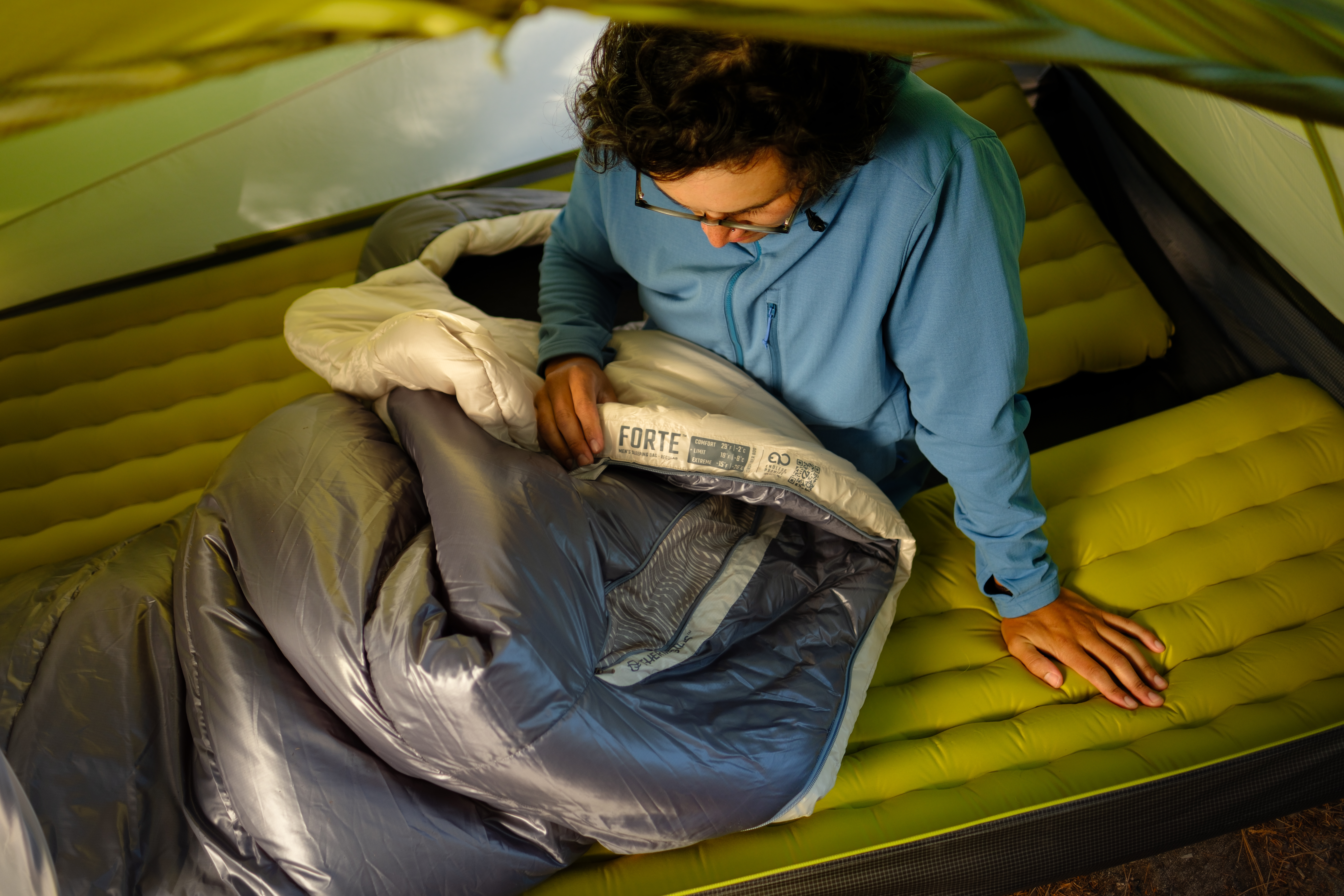
The NEMO Eclipse is the most comfort-forward pad NEMO has ever built. At 4 inches thick, it is the tallest air pad in their lineup, with longitudinal Spaceframe baffles (a proprietary baffle architecture that uses low-stretch trusses running the length of the pad to eliminate the springy, unstable feel of standard horizontal baffles and distribute body weight evenly across the surface) that eliminate springiness and distribute weight evenly. The surface is subtly contoured, creating a cradle effect that keeps you centered through the night. Side sleepers especially will notice the difference — hip and shoulder pressure that would wake you up on a thinner pad simply does not happen here.
The Exped Ultra 6.5R comes in at 3.5 inches thick with a horizontal baffle construction and raised Comfort Cradle side rails (foam-reinforced edges that run the length of the pad and act as a lateral buffer, preventing you from rolling off during sleep) that act as a lateral buffer. It is a flatter, more uniform sleep surface — excellent for back sleepers who prefer a stable platform. Both pads are genuinely comfortable, but the Eclipse's extra loft gives it the edge for pressure-point sleepers.
The Eclipse is also quieter than the Ultra, which improves the overall backcountry sleeping experience when sharing a tent.
Advantage: NEMO Eclipse
Versatility
The Eclipse comes in three rectangular sizes (Regular, Regular Wide, Long Wide) and a single R-Value, which covers most body types and sleep styles. The Exped Ultra 6.5R goes further — six configurations total, with mummy and rectangle shapes in medium, medium-wide, and long-wide, plus a duo option for shared tent footprints on ski traverses or basecamp trips. The Ultra is also available in multiple R-values for winter and three-season use. That lineup depth gives the Exped a real advantage for people with specific needs, and the mummy shape is a better fit for tight single-person alpine tents.
Advantage: Exped Ultra
Inflation

Both pads include pump bags that keep moisture out of the interior — important for long-term insulation performance. NEMO's Vortex pump sack (a dedicated inflation bag that captures and compresses air into the pad without introducing breath moisture, which degrades insulation over time) inflates the Eclipse in about 5 to 6 fills. The Laylow valve (a low-profile single-port valve that sits flush with the pad surface for easy micro-adjustments without snagging your sleeping bag) makes fine-tuning firmness straightforward. The Exped's Schnozzel Pumpbag (a dual-purpose inflation bag that doubles as a waterproof compression sack for packing the pad down) is a genuine bonus at the end of a cold night. Its FlatValve system (a two-port valve design with separate IN and OUT openings that allows one-handed inflation and deflation — useful when wearing gloves) uses separate IN and OUT ports, slightly more intuitive than a single valve, especially with gloves on.
Advantage: Draw — NEMO is faster to inflate; Exped's pump bag pulls double duty.
R-Value
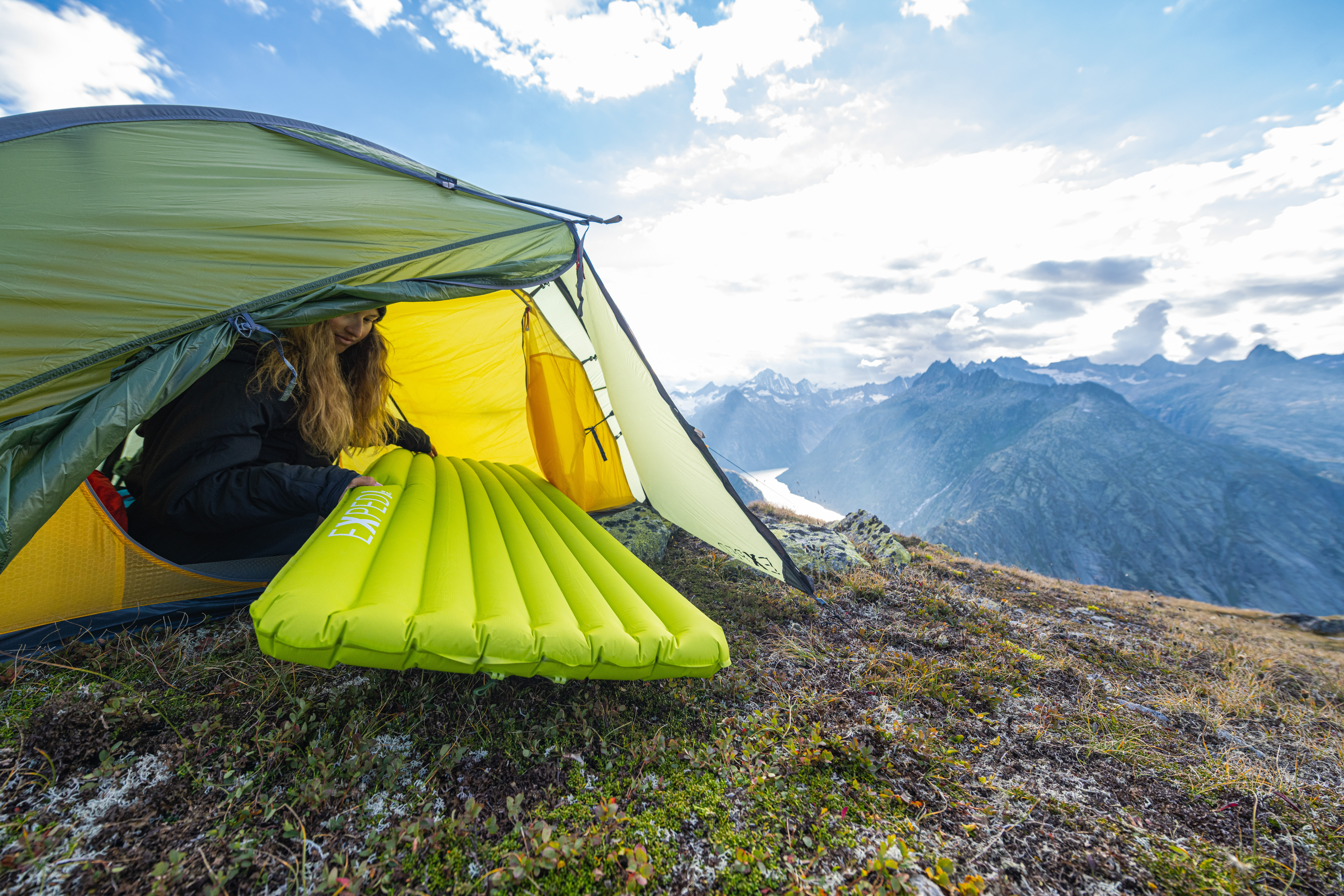
The Eclipse uses two suspended layers of NEMO's Thermal Mirror reflective film (a metalized polyester film suspended inside each baffle that reflects radiant heat back toward your body rather than allowing it to conduct through to the ground) inside each Spaceframe baffle to hit its R-6.2 rating — warmer than NEMO's own Tensor All-Season at R-5.4 and solidly in four-season territory. The Exped Ultra 6.5R uses SynMat Plus Technology (a hybrid insulation system pairing recycled Texpedloft synthetic microfiber with reflective foil layers — the microfiber adds loft and warmth while the foil blocks radiant heat loss, and the combination is noticeably quieter than pure foil designs), delivering an R-6.5 rating. If you are regularly camping in single-digit temps or on snow, that extra insulation headroom is worth having.
Advantage: Exped Ultra 6.5R
Weight

Rectangle-to-rectangle, these pads are essentially tied — the Eclipse Regular comes in at 1 lb 0 oz, the Exped Medium Rectangle at 1 lb 0.4 oz. Where the Exped separates itself is in the mummy configuration: the medium mummy weighs just 12 oz, making it one of the lightest ways to get this level of warmth into the mountains. The Eclipse is rectangular only, so if you are willing to sleep in a mummy shape, the Exped has a real weight advantage.
Advantage: Exped Ultra 6.5R — dead heat on rectangles, clear win in the mummy.
Packed Size
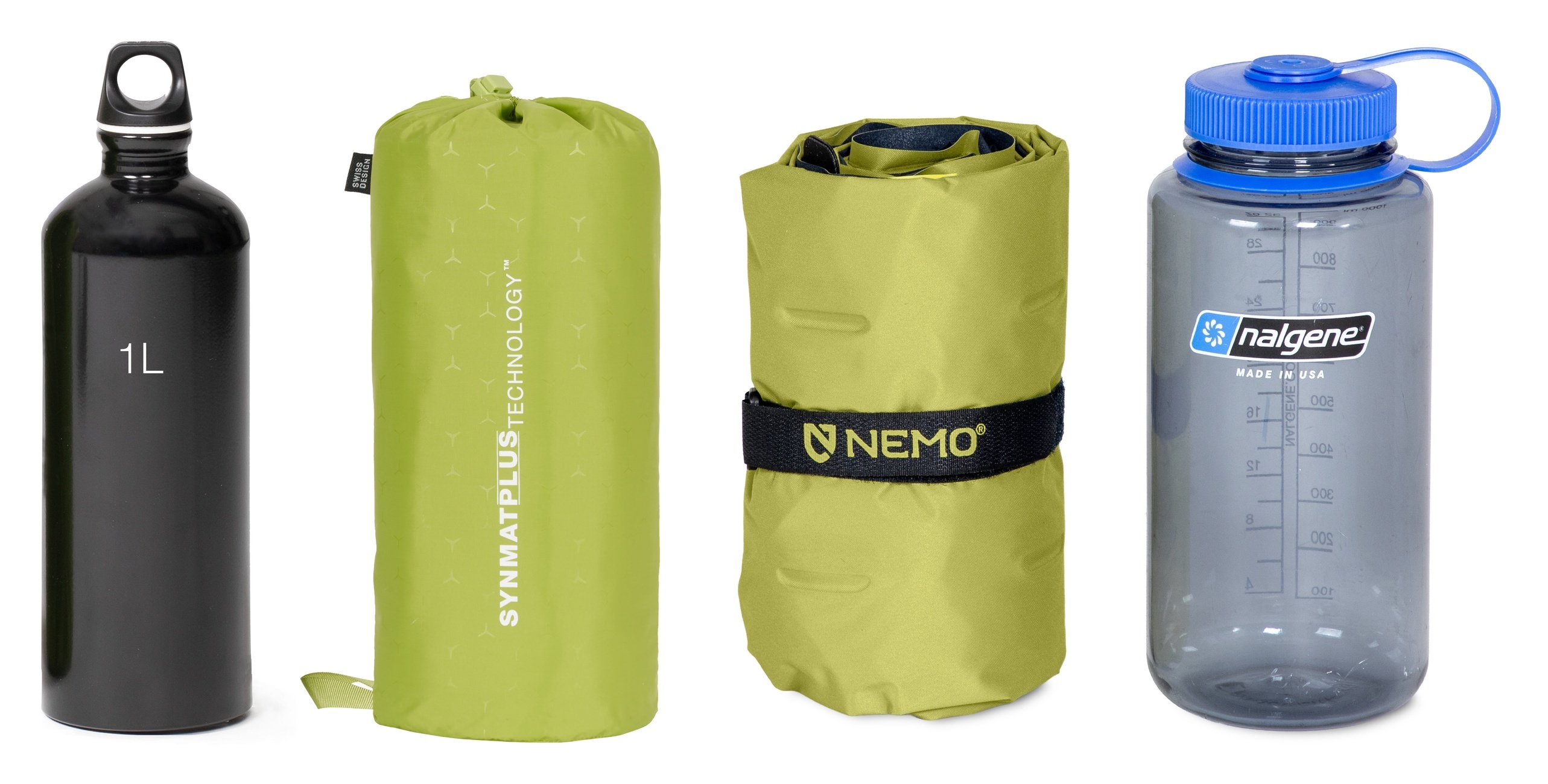
The Eclipse rolls down to roughly 9.5 inches by 4.5 inches — about the size of a tall Nalgene. Impressive for a 4-inch pad. The Exped packs down slightly smaller at approximately 9 inches by 4 inches in the medium rectangle, and smaller still in the mummy. When you are already carrying crampons, an ice axe, and a bivy, every inch counts. Neither pad will dominate your pack, but the Exped has the edge when space is tight.
Advantage: Exped Ultra 6.5R
How to Choose Between the NEMO Eclipse and Exped Ultra 6.5R
The right pad depends on four variables. Work through them in order.
Step 1: What temperature range are you camping in? Both pads are rated for four-season use, but the Exped Ultra at R-6.5 has a meaningful edge for camping on snow or in sustained single-digit temps. If you are three-season only and rarely see temps below 15 degrees Fahrenheit, the Eclipse at R-6.2 is adequate.
Step 2: How do you sleep? Side sleepers put more pressure on hips and shoulders. The Eclipse's 4-inch loft and contoured baffles are built for this and will feel noticeably more comfortable than the Exped's flatter profile. Back sleepers tend to sleep equally well on both.
Step 3: How tight is your shelter? If you are sleeping in a one-person alpine tent or a tight bivy, the Exped Ultra's mummy configuration uses significantly less floor space and weighs 4 oz less than the lightest Eclipse. If you have a standard two-person tent with room to spare, shape does not matter.
Step 4: What is your budget? The Eclipse is $160. The Exped Ultra is $200. If both pads otherwise suit your needs equally, the Eclipse is the better value. If the Exped's mummy shape, higher R-value, or lifetime warranty tip the decision, the extra $40 is easy to justify over the life of the pad.
Conclusion
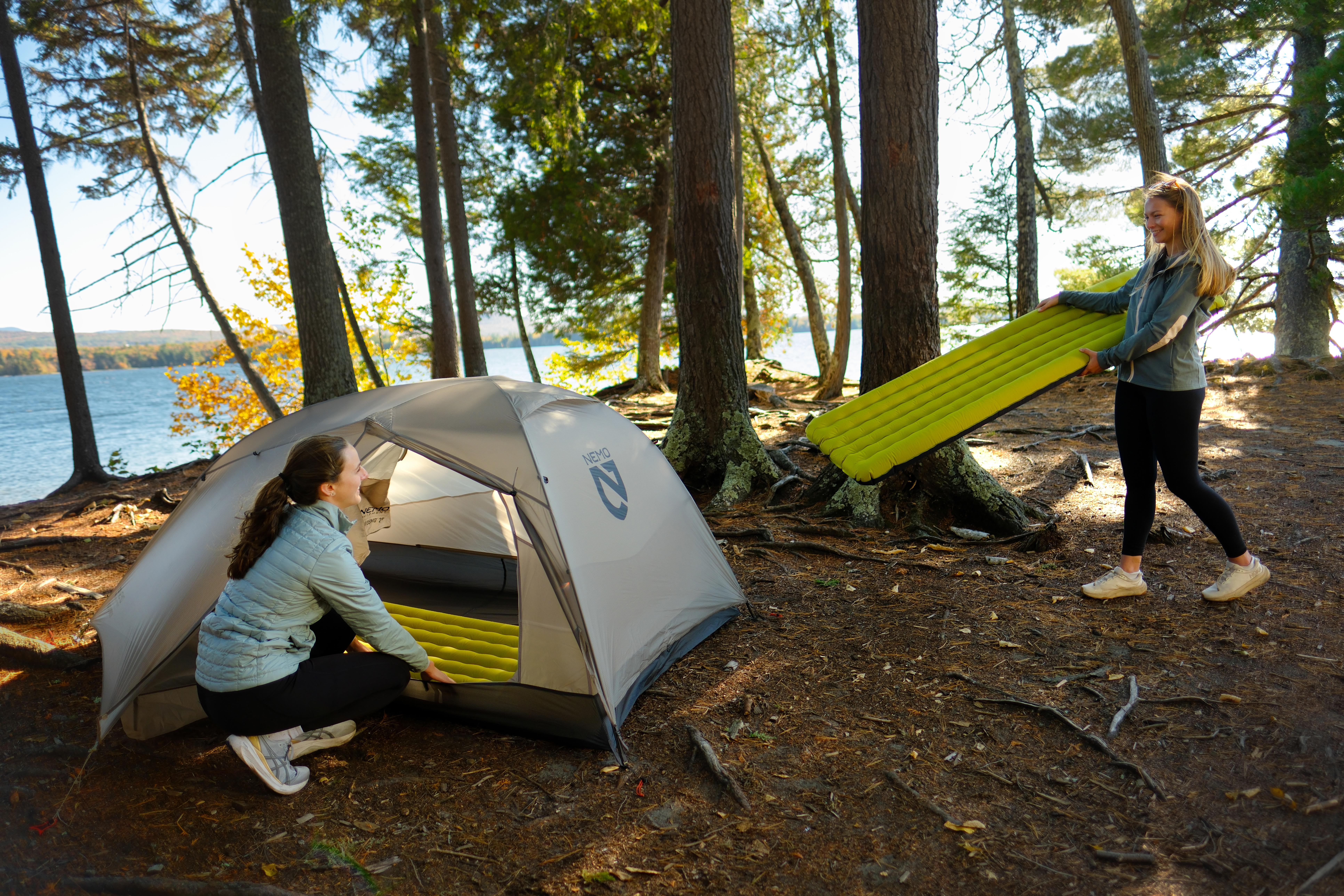
These are two of the best all-season sleeping pads available right now, and the right choice comes down to what you are optimizing for.
If comfort is the priority — if you are a side sleeper, if long days leave your hips and shoulders talking, or if you just want to feel genuinely rested in the backcountry — the NEMO Eclipse is the move. The 4-inch loft and contoured baffles are hard to beat at this weight class, and at $160 it is the better value for three-season-plus backpackers.
If you are pushing into serious cold — ski traverses, shoulder-season alpine objectives, or anywhere the temps regularly hit single digits — the Exped Ultra is the smarter investment. The higher R-value ceiling, quieter insulation, mummy option, and lifetime warranty make it the right tool for the job. It is $200, but it earns it.
NEMO Eclipse All-Season Sleeping Pad


Exped Ultra 6.5R Sleeping Pad
Frequently Asked Questions
What R-value do I need for a sleeping pad? For warm-weather camping above 40 degrees Fahrenheit, R-1 to R-2 is sufficient. For three-season backpacking in temps down to 20 degrees, R-3 to R-4 is the standard. For cold-weather and winter camping below 20 degrees, R-5 or higher is appropriate. The NEMO Eclipse at R-6.2 and the Exped Ultra at R-6.5 are both four-season rated and suitable for camping on snow.
Is the NEMO Eclipse or Exped Ultra better for side sleepers? The NEMO Eclipse is better for side sleepers. Its 4-inch loft and longitudinal Spaceframe baffles create a contoured cradle effect that relieves hip and shoulder pressure. The Exped Ultra's flatter 3.5-inch profile is better suited to back sleepers who prefer a stable, uniform surface.
What is the difference between the NEMO Eclipse and the NEMO Tensor? The Eclipse is NEMO's comfort-focused, high-loft pad designed for four-season use, with 4-inch Spaceframe baffles and an R-6.2 rating. The Tensor is a lighter, thinner pad optimized for packability in three-season conditions, with a lower R-value. The Eclipse is warmer and more comfortable; the Tensor is lighter and more packable.
Does the Exped Ultra 6.5R come in a rectangle shape? Yes. The Exped Ultra 6.5R is available in both mummy and rectangle shapes, in medium, medium-wide, and long-wide sizes, plus a duo option. The rectangle version is closer to the NEMO Eclipse in profile and feel. The mummy version is lighter and packs smaller, making it the better choice for weight-conscious alpine objectives.
How do I inflate the NEMO Eclipse without moisture getting inside? Use the included Vortex pump sack rather than blowing into the valve directly with your mouth. Breath moisture condenses inside the pad over time and degrades the insulation. The Vortex pump sack captures ambient air and inflates the pad in 5 to 6 fills without introducing moisture.
What is the Exped Ultra 6.5R warranty? Exped offers a lifetime warranty on the Ultra 6.5R covering manufacturing defects. This is a meaningful advantage over pads that offer only one- or two-year warranties, particularly for a pad used in demanding alpine conditions where material stress is higher.
Can I use these pads for car camping? Yes, both pads work for car camping, but neither is optimized for it. Both are designed for backcountry use where weight and packed size matter. For car camping, a thicker, larger self-inflating pad or air mattress will typically provide more comfort at a lower cost. That said, the NEMO Eclipse's 4-inch loft is genuinely comfortable for car camping use if you already own it.
Which pad is better for ski mountaineering and winter camping? The Exped Ultra 6.5R is the better choice for ski mountaineering and winter camping. The R-6.5 rating provides more insulation headroom than the Eclipse's R-6.2 in sustained cold, the mummy shape reduces floor space requirements in a tight bivy or small alpine tent, and the lightweight configuration at 12 oz in the medium mummy makes it more compatible with a fast-and-light ski mountaineering kit.
About the Author
 Derek Newman
Born in the Wasatch, Derek has had an affinity for mountain life since day one. He was on skis the year he learned to walk, and as a high school graduation present he gifted himself rock climbing lessons. Nearly two decades later, Derek spends most of his time climbing up and/or skiing down most of the mountains around Salt Lake City, and he’s traveled around the world multiple times for the sole purpose of peak exploration. When he isn’t a man about camp, he’s working in Campman’s content marketing crew writing up blogs about backcountry skiing or rock climbing as well as describing products that he’s used personally. He’s climbed in most climbing shoes, toured on most backcountry skis, and ridden the resort on skis, snowboards, and even some evac sleds.
Share on: