
Hardshells vs. Softshells: Which Jacket Do You Need?
Posted by Derek Newman on 13th Oct 2026
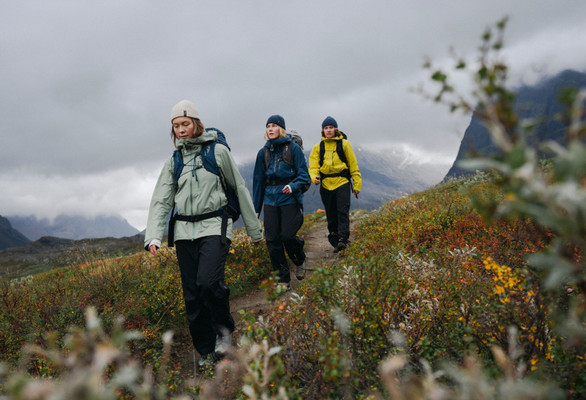
Knowing when to wear a hardshell or a softshell is paramount to outdoors play, and picking the wrong one means either sweating through a stiff shell on a bluebird ski day or getting soaked through a soft one on a stormy ridge line. The hardshell versus softshell question comes up constantly, whether you are packing for a Wasatch powder day or a fall hike up to the Uintas. Below, we break down what each jacket type actually does, where each one falls short, and which Campman picks make the most sense for skiing, hiking, and camping this season.
Quick Answer: A hardshell is a fully waterproof, windproof outer layer built from a stiff, non-stretch membrane like Gore-Tex. It is the right call in sustained rain, deep powder, or high wind. A softshell is a stretchy, breathable, wind-resistant layer built for aerobic movement in variable but not fully wet conditions. Reach for a hardshell when the forecast turns nasty and reach for a softshell when you are moving fast and need to dump heat.
What Is a Hardshell?
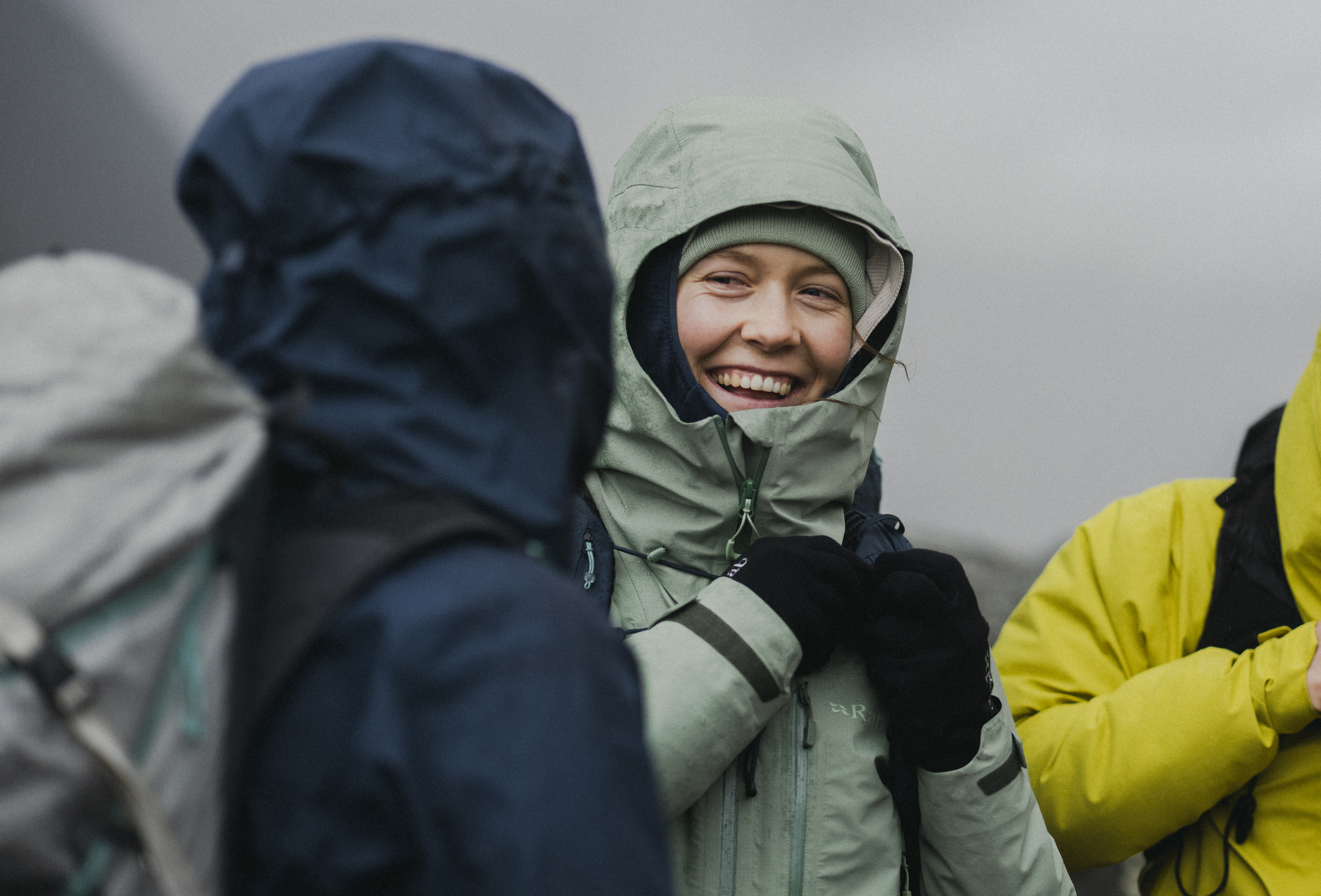
A hardshell is an outer layer built for one job, keeping water and wind out completely. The fabric is a laminated membrane, most commonly Gore-Tex, ePE, or a proprietary PU-based membrane, bonded to a face fabric in a 2-layer, 2.5-layer, or 3-layer construction. Seams are taped so nothing leaks through the stitching, and the fabric itself does not stretch much, if at all. Hardshells are designed to be worn over insulating midlayers rather than against bare skin, acting as the final barrier between you and the elements.
Because a hardshell has to seal out water entirely, it trades away some breathability and nearly all stretch. Manufacturers offset this with pit zips, mesh-lined pockets, and increasingly breathable membranes, but a hardshell will never move or vent like a knit softshell.
Pros of a hardshell
- Fully waterproof in sustained rain, wet snow, and spray
- Blocks wind completely, even in exposed alpine terrain
- Packs down small and layers easily over a puffy or fleece
- Holds up to abrasion from packs, skis, and rock
Cons of a hardshell
- Stiffer fabric restricts mobility compared to a softshell
- Less breathable, which can lead to clamminess during high-output efforts
- Crinkly hand feel and louder fabric noise
- Typically pricier than a comparable softshell
What Is a Softshell?
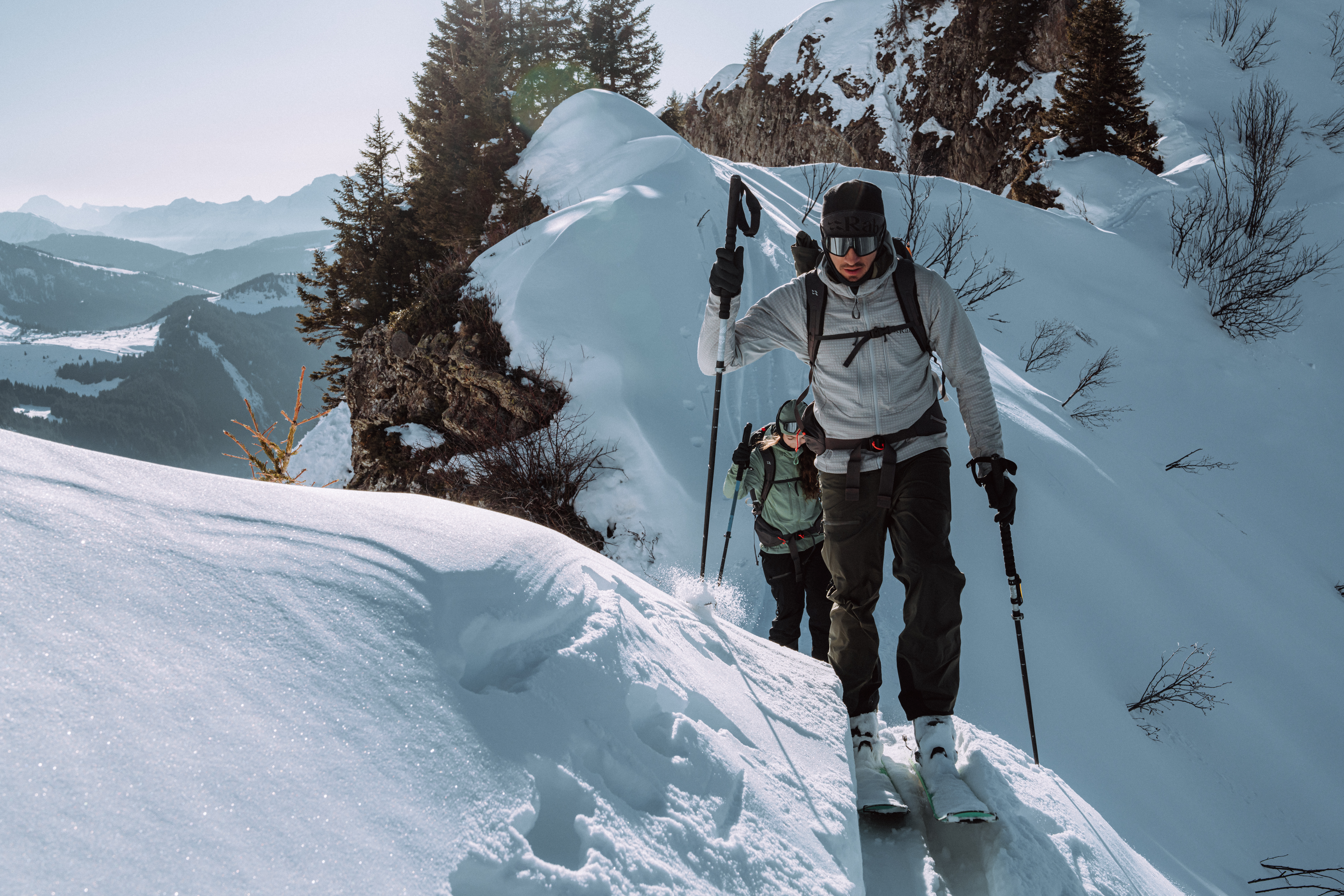
A softshell is a stretch-woven or knit jacket designed to move with you first and block weather second. Most softshells use a tightly woven face fabric with a DWR (durable water repellent) finish, sometimes paired with a thin membrane, that resists wind and light moisture without sealing out water entirely. Because the fabric itself stretches, softshells excel at high-output activities like climbing, hiking, and ski touring where mobility and breathability matter more than complete storm protection.
Some softshells push further into weather protection with waterproof-rated membranes, like Rab's Proflex fabric, blurring the line between the two categories. These waterproof softshells still stretch and breathe like a traditional softshell, but they carry a true waterproof rating for handling steady rain or wet snow.
Pros of a softshell
- Stretch fabric moves freely through climbing, skinning, and scrambling
- More breathable than a hardshell during aerobic effort
- Soft, quiet fabric that feels comfortable against a baselayer
- Often doubles as a standalone layer in mild, dry conditions
Cons of a softshell
- Most are only water-resistant, not fully waterproof
- DWR finishes wear off over time and need periodic reapplication
- Wind resistance is strong but rarely complete
- Not built for sustained downpours or wet powder days
What Is the Difference Between a Hardshell and a Softshell?
The short version is that a hardshell prioritizes complete weather protection while a softshell prioritizes mobility and breathability. Everything else, from fabric weight to how the jacket layers into your system, follows from that one tradeoff. Here is how the two categories stack up side by side.
| Category | Hardshell | Softshell |
| Waterproofing | Fully waterproof, taped seams | Water-resistant to waterproof depending on model |
| Breathability | Moderate, improves with venting | High, ideal for aerobic effort |
| Stretch | Minimal to none | Moderate to high, four-way stretch common |
| Wind Resistance | Complete | Strong but not always complete |
| Best Conditions | Sustained rain, deep powder, high wind | Variable weather, high-output movement |
| Layering Role | Outer shell over insulation | Standalone layer or light outer shell |
Best Hardshells and Softshells for Skiing
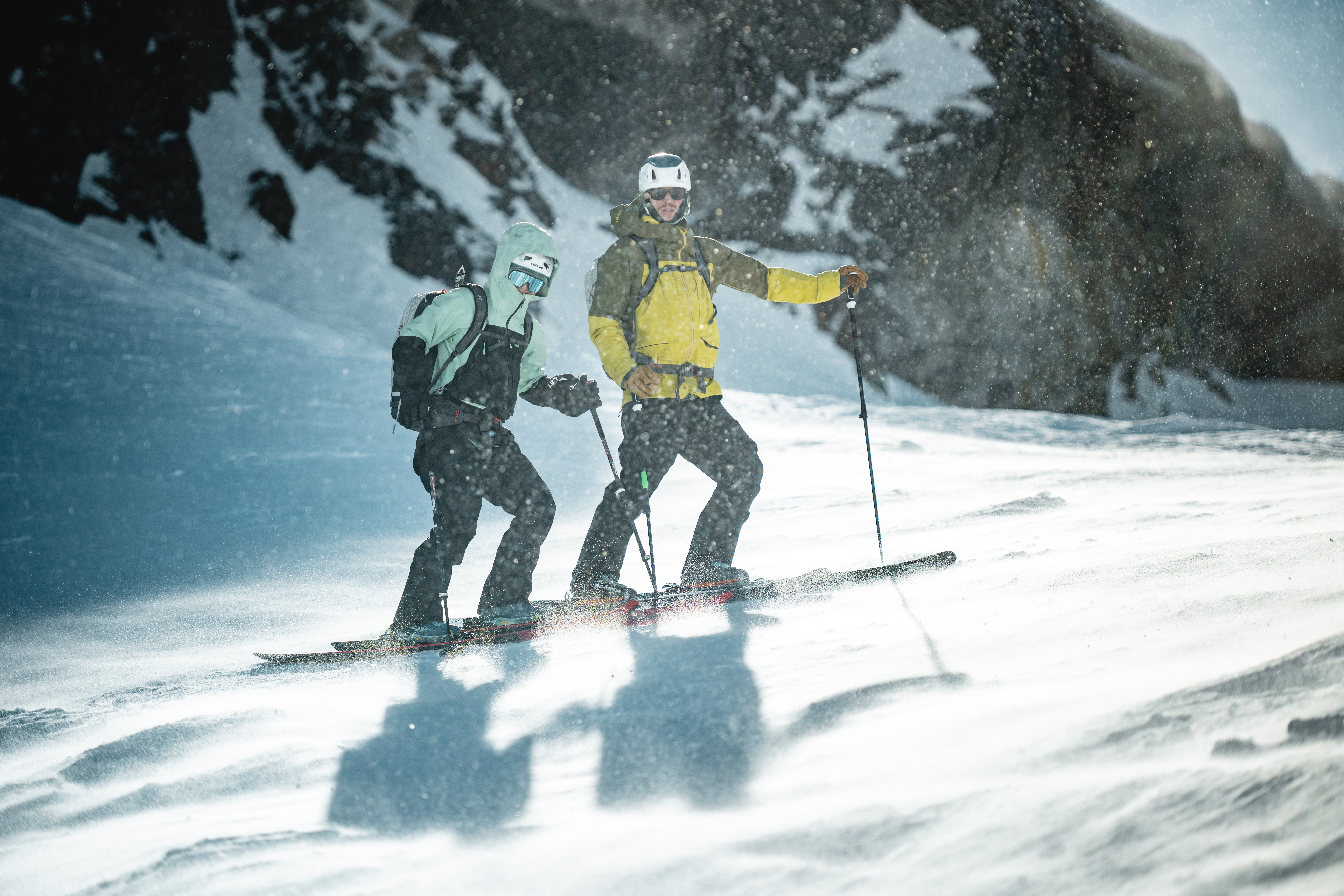
Ski days in the Cottonwood Canyons swing from bluebird and calm to a full-on storm cycle within a single lift ride, which is why both categories still earn a place in a skier's kit. A Gore-Tex hardshell is the standard for deep powder and wind-loaded ridgelines, while a technical softshell brings stretch and breathability for touring days and milder conditions without giving up real waterproofing.
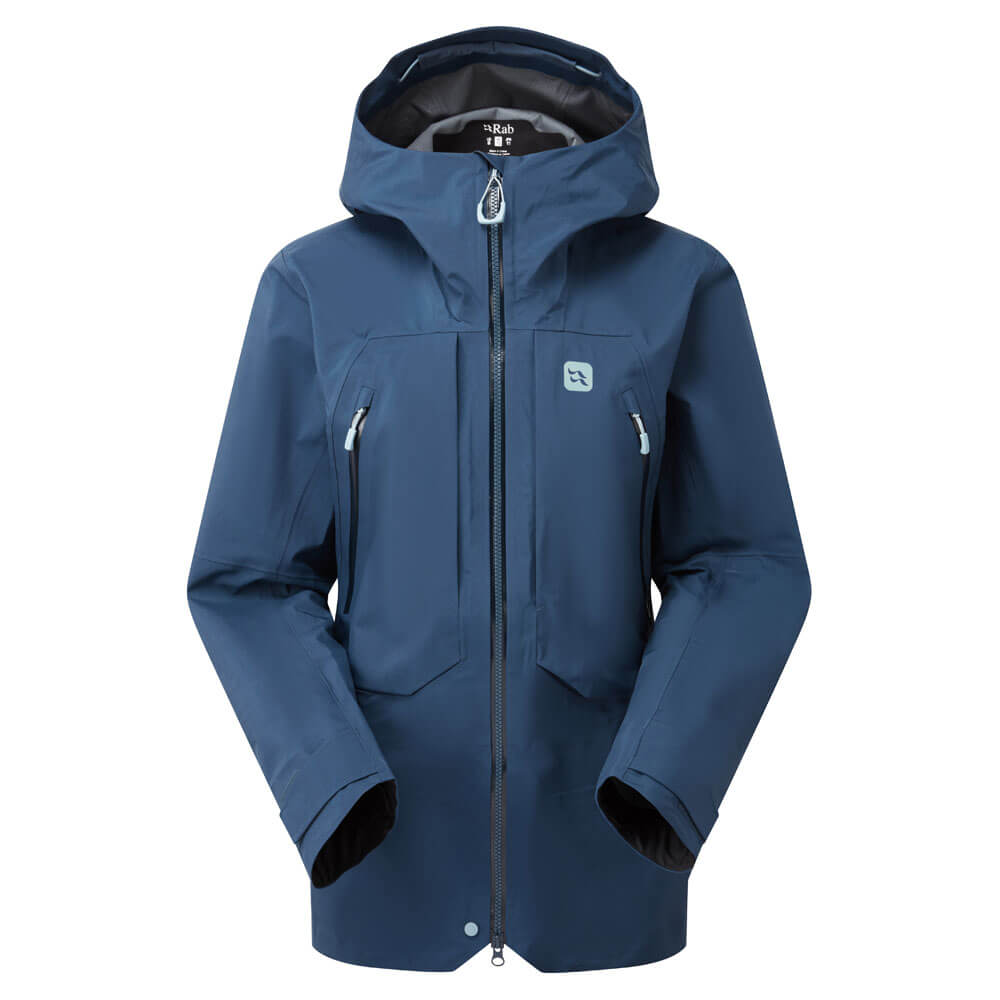
Best Hardshell Ski Jacket: Rab Khroma Converge Gore-Tex
The Rab Khroma Converge is a true 3-layer Gore-Tex hardshell built for resort laps and backcountry missions alike. A regular, articulated fit leaves room to layer up while still allowing full range of motion on the way down, and ventilating zippers under each sleeve help dump heat on the skin track. A zip-off powder skirt, helmet-compatible hood, and hook-and-loop cuffs round out a fully-featured shell that holds up to abuse in and out of the resort.
|
|
|


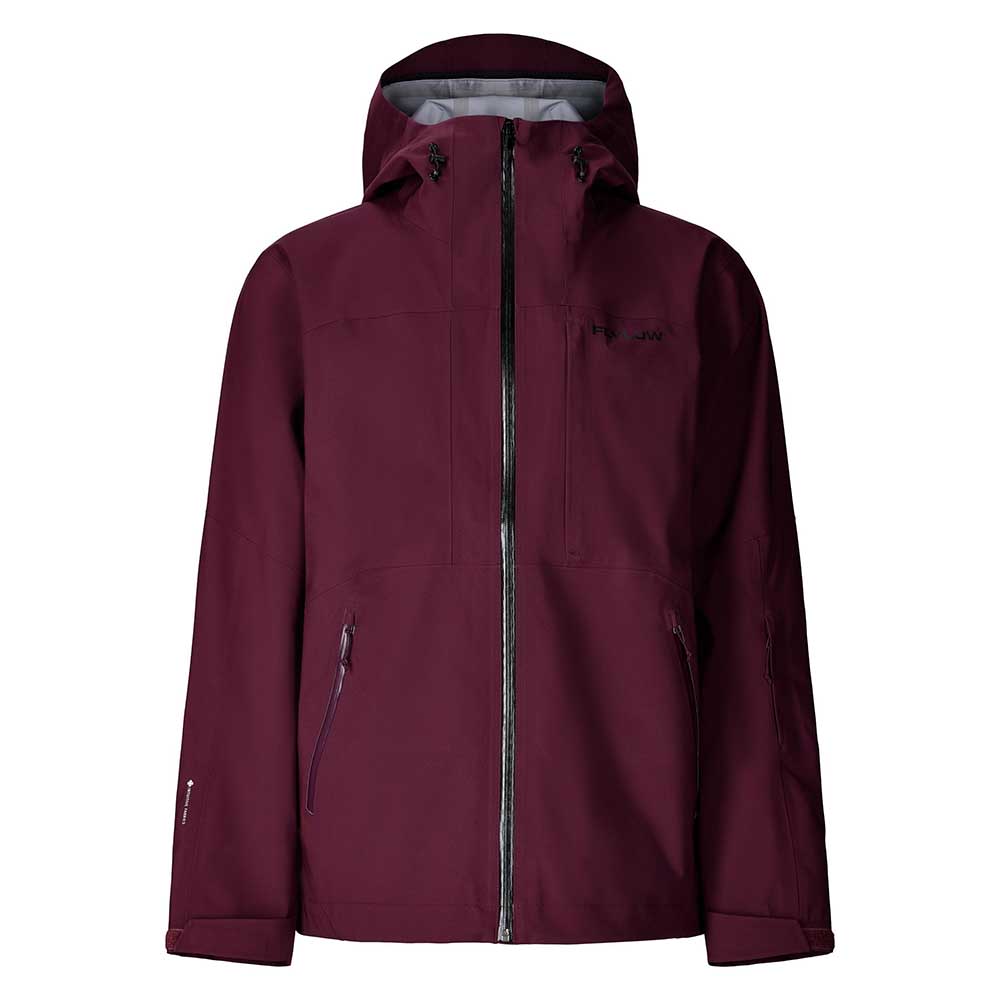
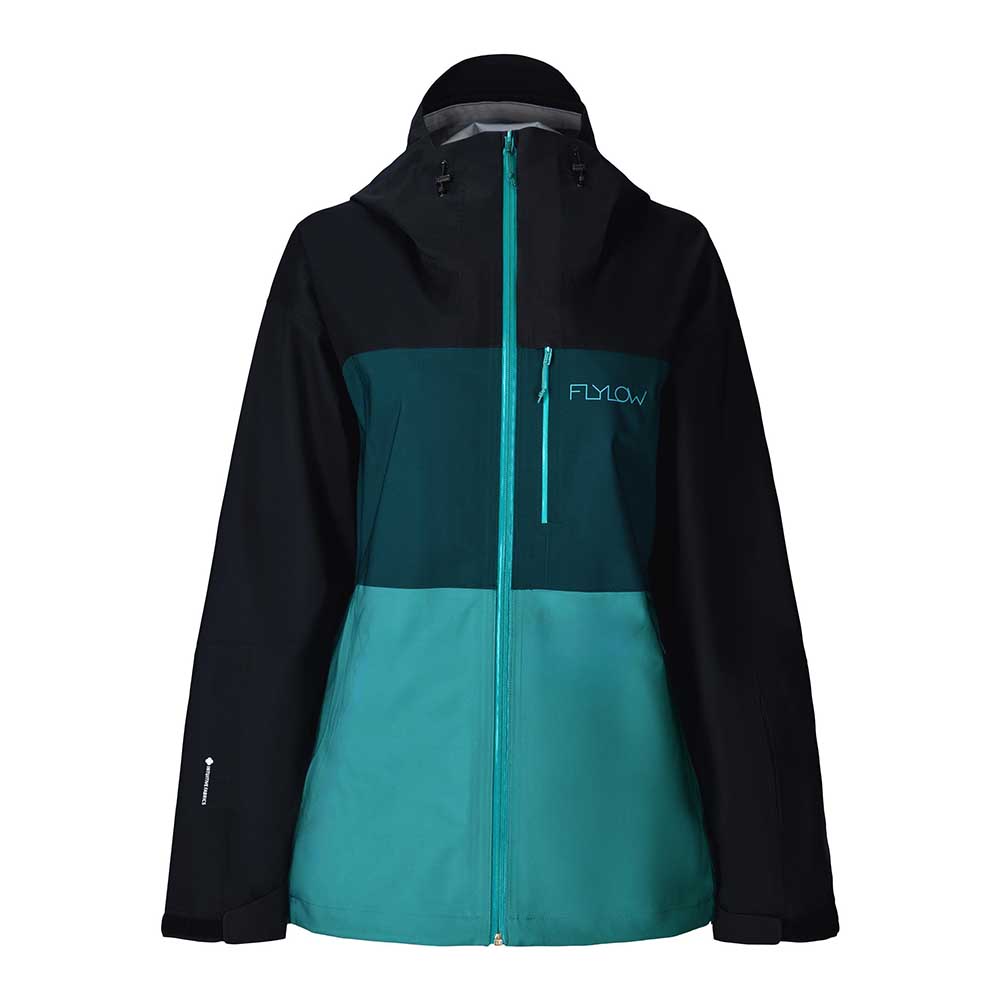
Best Softshell for Skiing: Flylow Malone Ski Jacket and Flylow Lucy Ski Jacket
The men's Malone and women's Lucy are do-it-all three-layer softshells built to transition from the skin track to the chairlift without missing a beat. Both use the Intuitive Tactic 3-layer fabric, carrying a genuine 20k/20k waterproof breathable rating while still delivering the stretch and quick-drying comfort of a true softshell. A removable powder skirt, helmet-compatible hood, dedicated pass pocket, and interior zippered pocket round out jackets built to be worn every day of the season.
|
|
|

Best Hardshells and Softshells for Hiking & Camping
The three picks below take different approaches to weather protection on the trail. The Rab Phantom Mountain Jacket is a true ultralight hardshell for when conditions turn serious, the Rab Kinetic 2.0 adds genuine waterproofing to a stretchy softshell base for unpredictable forecasts, and the Picture Organic Outif keeps things lighter and more packable for drier trail days with a stiff breeze.
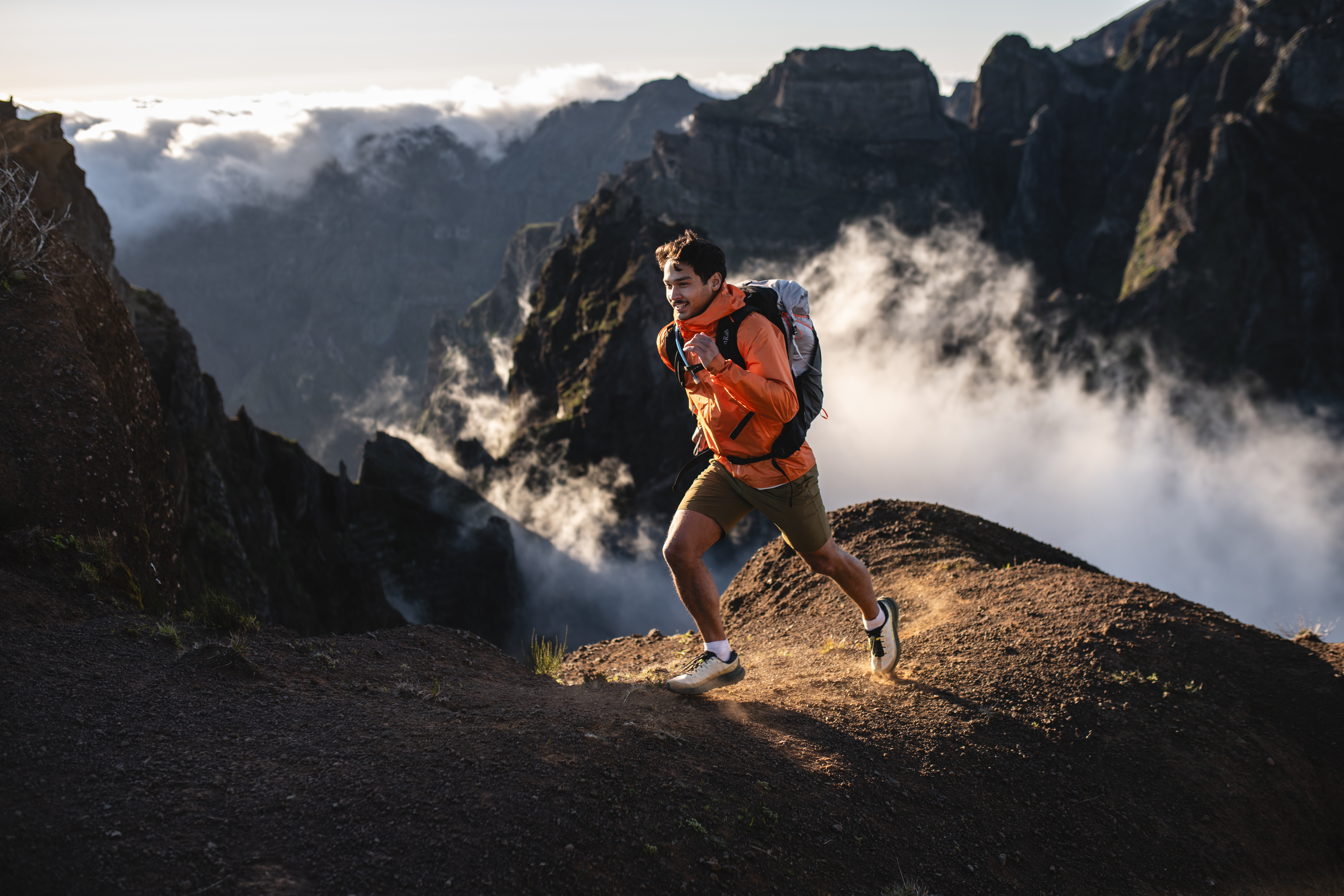
Best Hardshell for Hiking & Camping: Rab Phantom Mountain Jacket
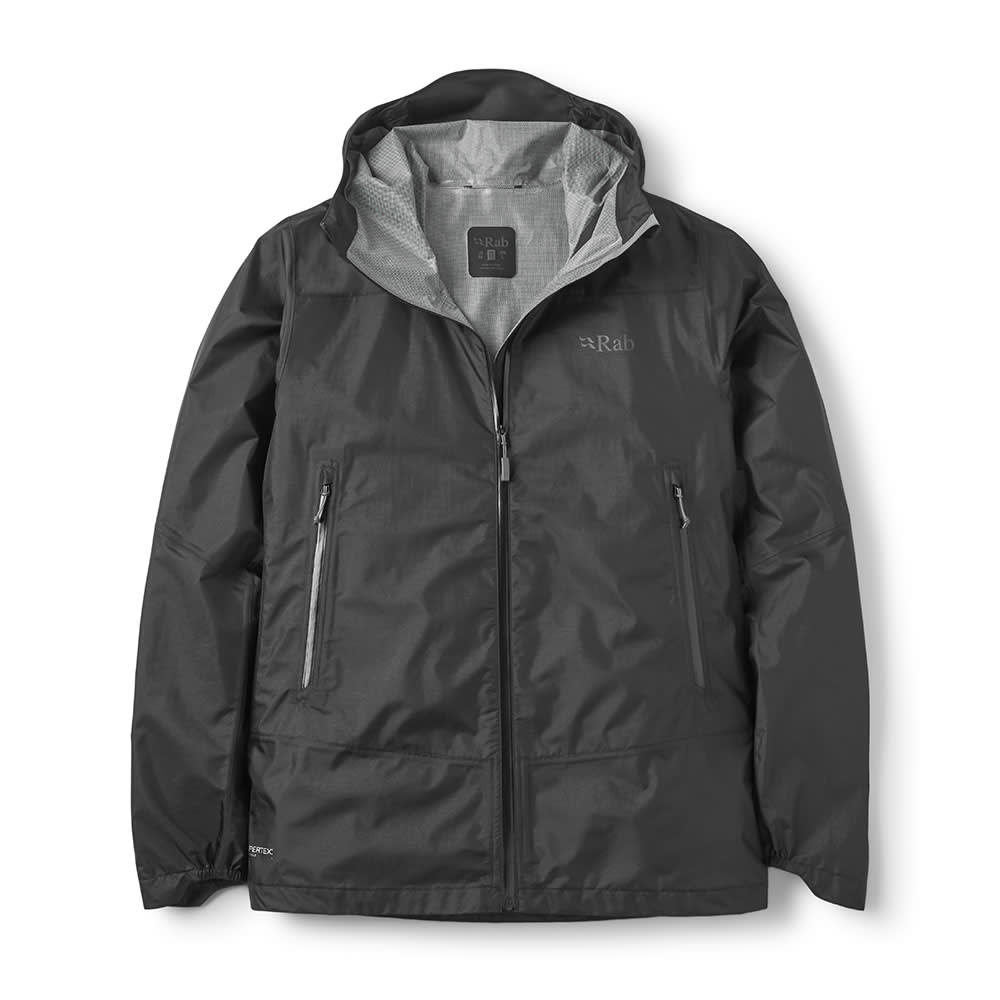
The Rab Phantom Mountain Jacket is a full-featured waterproof hardshell built for serious mountain objectives without the weight of a traditional shell. A 30D Pertex Shield Diamond Fuse 2.5-layer fabric delivers a 20,000mm hydrostatic head and 20,000g MVTR breathability rating, holding up to sustained alpine storms while packing into its own hood the moment the weather clears. Articulated sleeves and a stiffened hood peak keep it functional on technical terrain, making it the shell to grab when a hiking trip could turn into a real mountain objective.
|
|
|
Best Waterproof Softshell for Hiking & Camping: Rab Kinetic 2.0 Waterproof Jacket
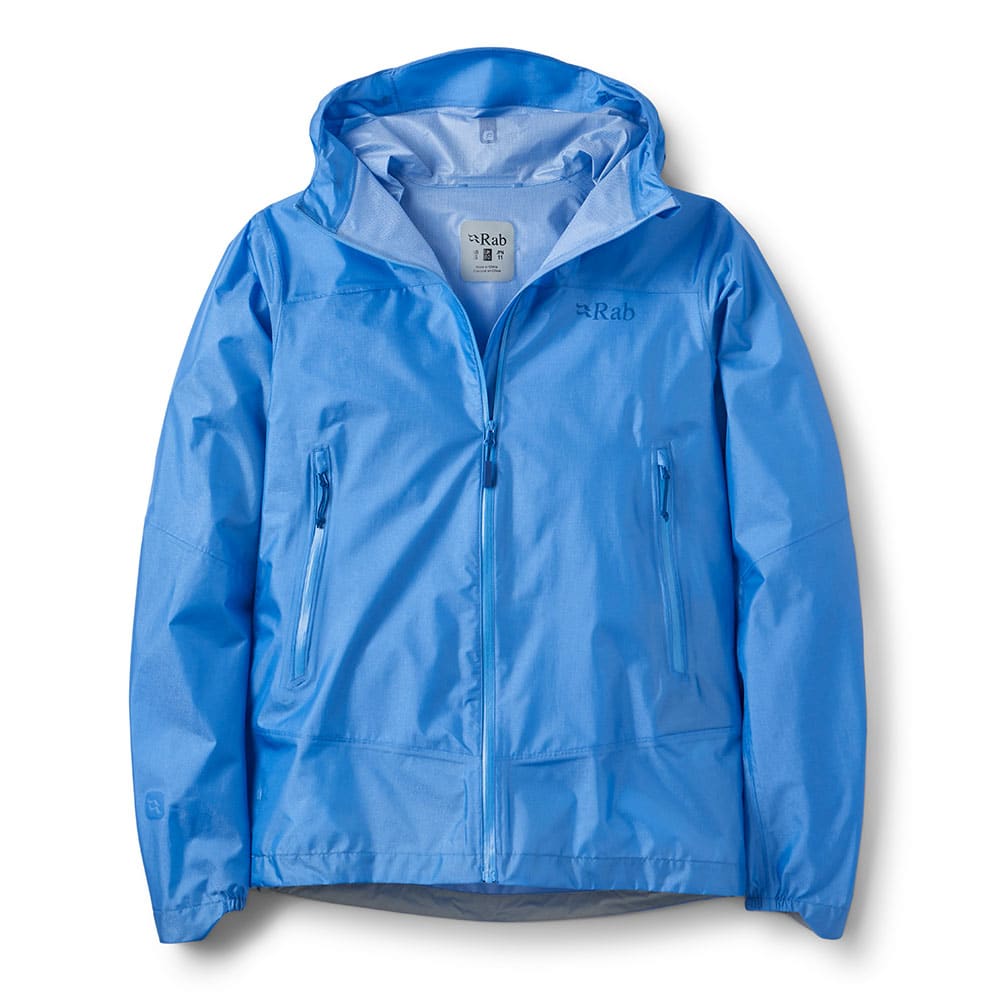
The Rab Kinetic 2.0 uses Rab's Proflex fabric, a 3-layer knit with a PU membrane, to deliver a true 10,000mm waterproof rating and 35,000 g/m2 breathability rating in a jacket that still stretches and moves like a softshell. An under-helmet stretch hood with a stiffened peak blocks rain without sacrificing visibility, and waterproof zippers keep the two large hand pockets sealed against passing showers. It is the jacket to grab when the forecast is unpredictable and you don't want to swap layers mid-hike.
|
|
|


Best Softshell for Hiking & Camping: Picture Organic Outif Softshell Jacket
For breezy hikes and fall trail days when full storm protection isn't necessary, the Picture Organic Outif trades hardshell armor for four-way stretch and packable comfort. Taped critical seams and a PFC-free finish add light protection from passing showers and wind, while a straight, slimmer fit sits closer to the body than Picture Organic's regular-fitting jackets. It packs into its own stow pocket, making it an easy layer to stash in a pack until the wind picks up on the trail.
|
|
|


Product Comparison Table
| Product | Type | Waterproofing | Breathability | Best Use |
| Rab Khroma Converge Gore-Tex Ski Jacket | Hardshell | Gore-Tex 3-Layer | Moderate | Resort and backcountry skiing |
| Flylow Malone / Lucy Ski Jacket | Softshell | 20k/20k | High | Resort and backcountry skiing |
| Rab Phantom Mountain Jacket | Hardshell | 20,000mm | High, 20,000g MVTR | Mountaineering, alpine climbing, technical hiking |
| Rab Kinetic 2.0 Waterproof Jacket | Waterproof Softshell | 10,000mm | High, 35,000 g/m2 | Hiking, climbing, casual use |
| Picture Organic Outif Softshell Jacket | Softshell | Water-resistant, PFC-free DWR | High | Hiking in wind and light rain |
Frequently Asked Questions
Is a hardshell or softshell better for skiing?
It depends on the storm. A hardshell like the Rab Khroma Converge is the safer choice for deep powder days and high wind, since it seals out moisture completely. A softshell works well for milder days when you want more breathability and less bulk, though it should not be your only option once the weather turns.
Can I wear a softshell in the rain?
Yes, for light rain or short exposure. A standard softshell with a DWR finish will shed drizzle and passing showers, but sustained rain will eventually soak through. A waterproof softshell like the Rab Kinetic 2.0 handles steady rain better than a standard softshell while still keeping the stretch and breathability you expect.
Do I need a hardshell if I already own a softshell?
Most three-season adventurers benefit from owning both. A softshell covers everyday wind and light moisture, while a hardshell is the backup plan for the storm days when a softshell simply can't keep up.
What does Gore-Tex mean on a hardshell jacket?
Gore-Tex is a waterproof, breathable membrane laminated into the jacket's fabric. It blocks liquid water from passing through while still allowing water vapor from sweat to escape, which is why hardshells built with it stay dry inside and out during sustained storms.
Are waterproof softshells the same as hardshells?
Not quite. A waterproof softshell like the Rab Kinetic 2.0 carries a genuine waterproof rating, but it still stretches and breathes more like a traditional softshell than a rigid hardshell laminate. Think of it as a hybrid built for hikers and climbers who want protection without giving up mobility.
How do I layer with a hardshell vs a softshell?
A hardshell goes on top of your insulation as the final barrier layer, so size it to fit comfortably over a midlayer or puffy. A softshell can work as a standalone outer layer over a baselayer in mild conditions, or as a wind-blocking midlayer underneath a hardshell during a full-on storm.
Which is better for backcountry skiing, a hardshell or softshell?
Many backcountry skiers carry a softshell for the skin track and a hardshell for the descent. The breathability of a softshell keeps you from overheating on the way up, while a packable hardshell in your pack handles wind and snow on the way down.
Do softshells need to be waterproofed or treated?
Over time, yes. The DWR finish on a softshell wears down with use and washing, causing water to soak into the face fabric instead of beading up. A wash-in or spray-on DWR treatment restores that water resistance and keeps a softshell performing like new.
About the Author
 Derek Newman
Born in the Wasatch, Derek has had an affinity for mountain life since day one. He was on skis the year he learned to walk, and as a high school graduation present he gifted himself rock climbing lessons. Nearly two decades later, Derek spends most of his time climbing up and/or skiing down most of the mountains around Salt Lake City, and he's traveled around the world multiple times for the sole purpose of peak exploration. When he isn't a man about camp, he's working in Campman's content marketing crew writing up blogs about backcountry skiing or rock climbing as well as describing products that he's used personally. He's climbed in most climbing shoes, toured on most backcountry skis, and ridden the resort on skis, snowboards, and even some evac sleds.
Share on: