
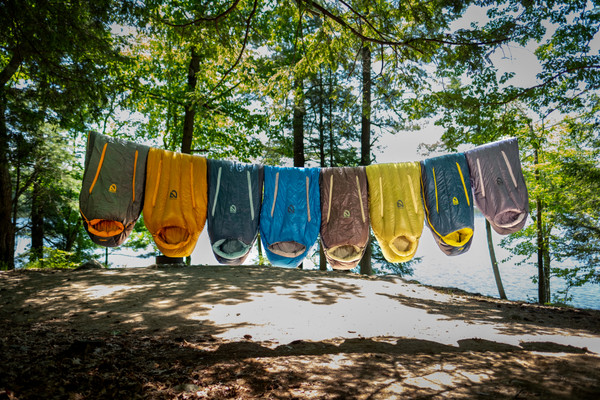
Best Sleeping Bags of Summer 2026
Posted by Derek Newman on 9th Jun 2026
The best sleeping bag for summer 2026 depends on how you camp — backpacking trips need a light, packable mummy or spoon-shaped bag, while car camping calls for more comfort and versatility. For most three-season campers in the West, a 15F to 30F down bag covers the widest range of conditions. Below you will find the top picks for camping and backpacking, organized so you can find the right bag for any backcountry adventure.
Best Sleeping Bags for Summer 2026: Quick Comparison
| Bag | Best For | Temp Rating | Insulation | Weight |
|---|---|---|---|---|
| Big Agnes Lost Ranger 3N1 | All-round use, camp to backpack | 0F / 15F | 650-fill hydrophobic down | Varies by config |
| NEMO Disco Endless Promise | Backpacking, side sleepers | 15F / 30F | 650-fill hydrophobic down | ~2 lb 3 oz (15F) |
| Big Agnes Echo Park | Car camping comfort | 0F / 20F / 35F | Recycled synthetic | ~4 lb (35F) |
| Big Agnes Dream Island 20 | Couples car camping | 20F | Recycled synthetic | 6 lb 13 oz |
| Big Agnes Little Red 20 | Kids up to 4 feet tall | 20F | Recycled synthetic | 1 lb 12 oz |
Best All-Round: Big Agnes Lost Ranger 3N1
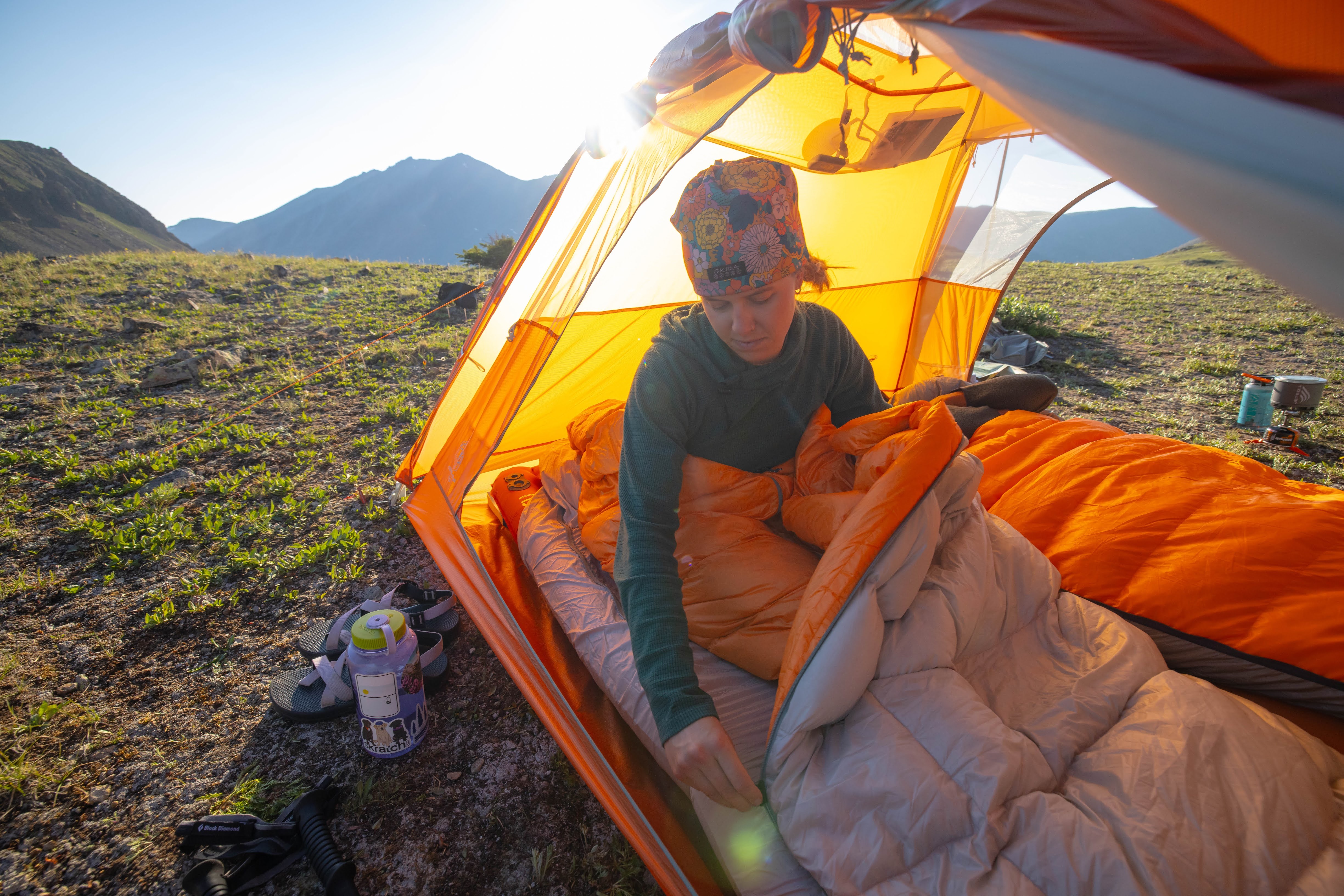
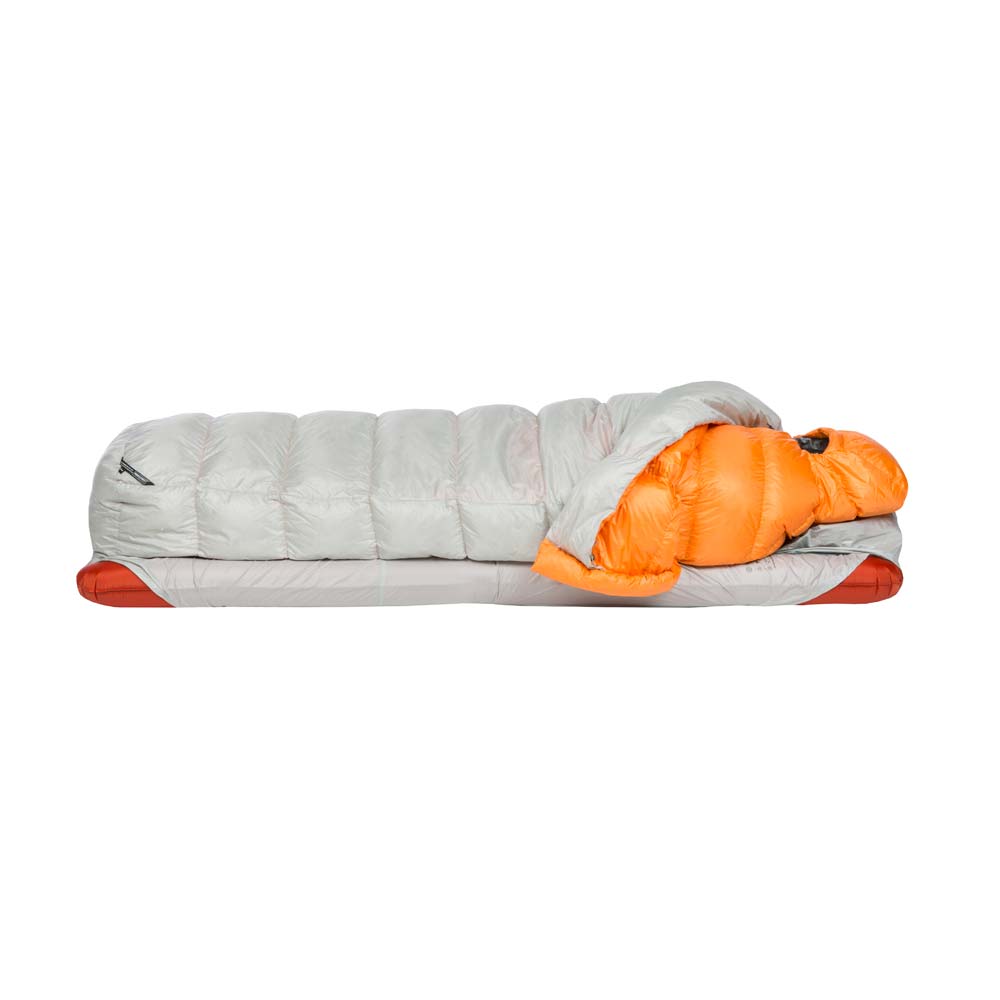
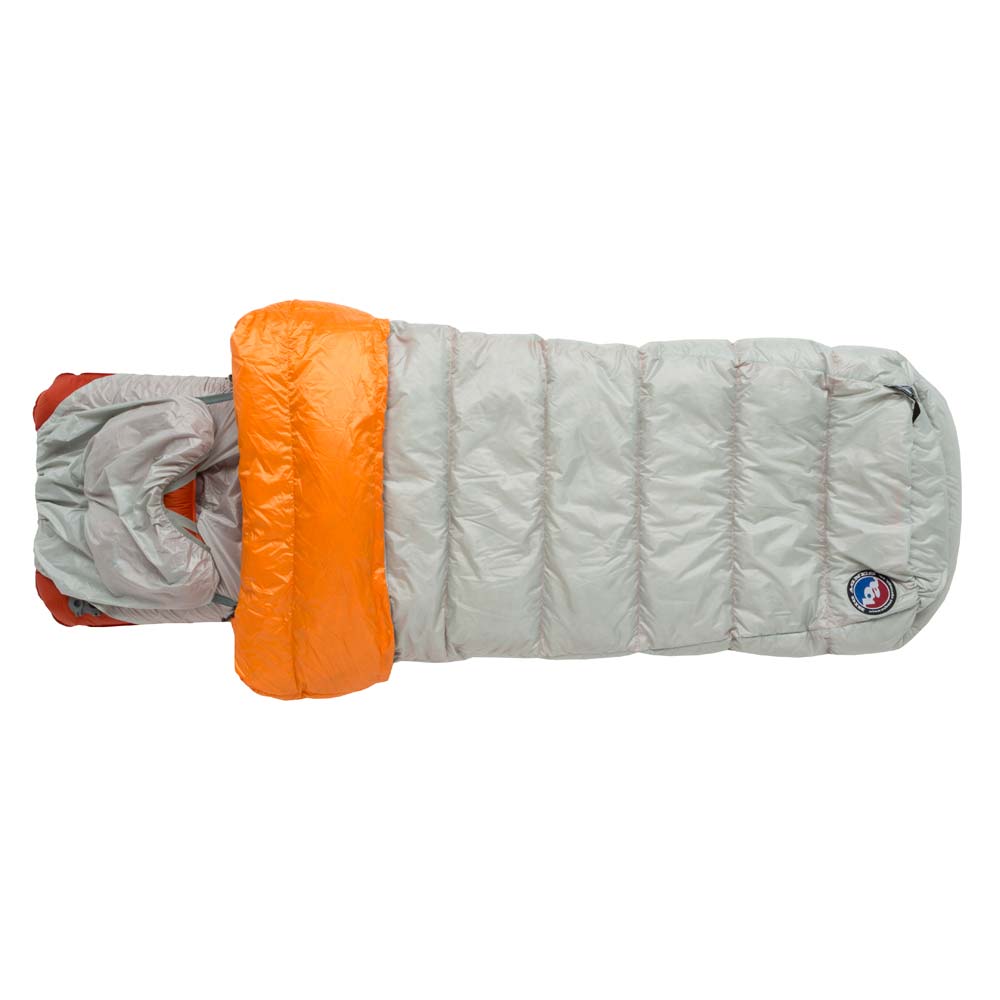
The Lost Ranger 3N1 is a two-bag modular system that breaks down for backpacking or combines together for comfier camping. A Sidewinder-style inner bag and a semi-rectangular outer bag zip together or work independently, giving you a wider temperature range from a single bag. Both bags use 650-fill Downtek PFC-free hydrophobic down on recycled, bluesign-approved, water-repellent fabrics. The Padlok sleeve locks your sleeping pad in place so you stay on your insulation all night, and the inner bag’s jacket-style hood seals in heat overhead.
Key terms: 650-fill power refers to the loft quality of the down — higher fill means more warmth per ounce. Hydrophobic down has a water-resistant treatment so the insulation keeps lofting even if it gets damp. PFC-free means the DWR water-repellent finish uses no PFAS chemicals. The Padlok sleeve is a pad attachment system that keeps you centered on your sleeping pad all night so cold ground does not steal your warmth from below.
Big Agnes Lost Ranger 3N1 15F


Big Agnes Lost Ranger 3N1 0F
Best for Backpacking: NEMO Disco Endless Promise
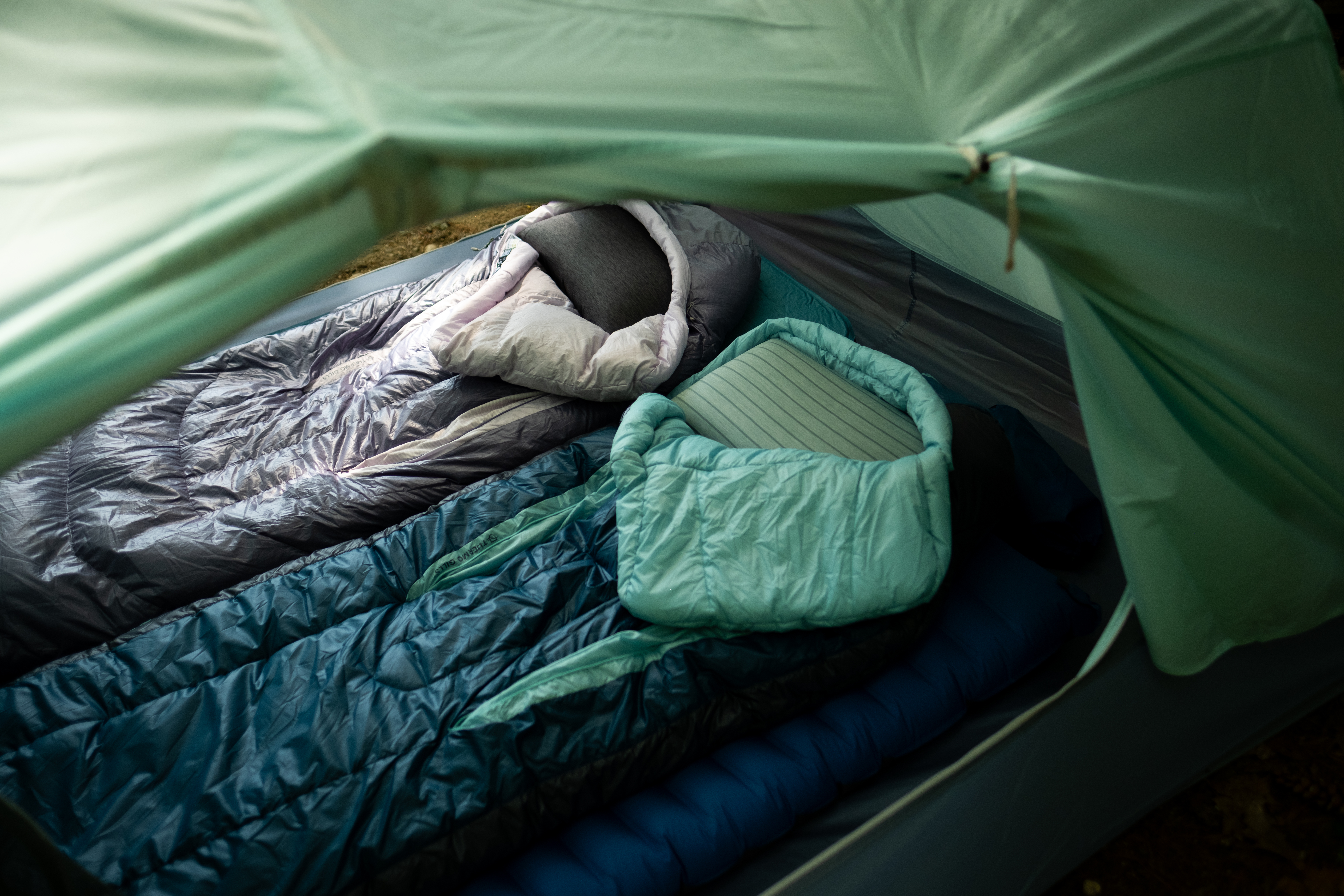
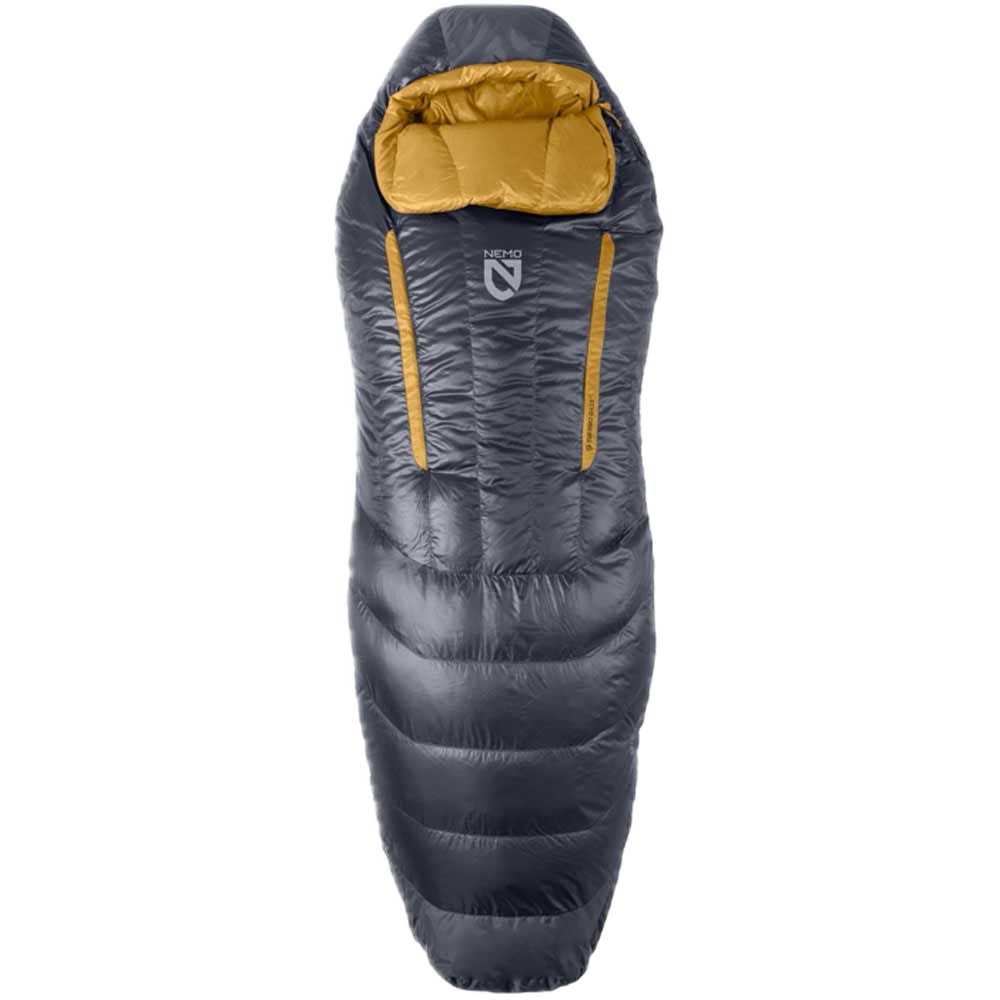
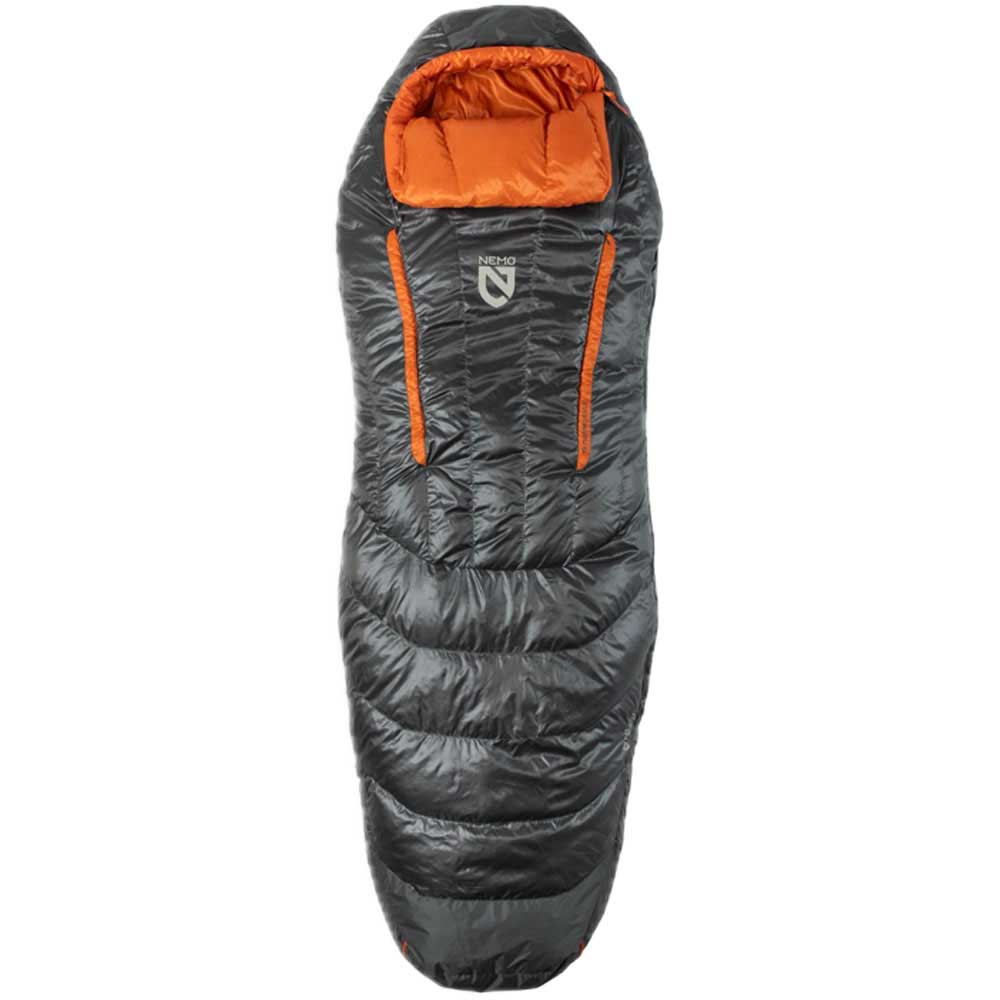
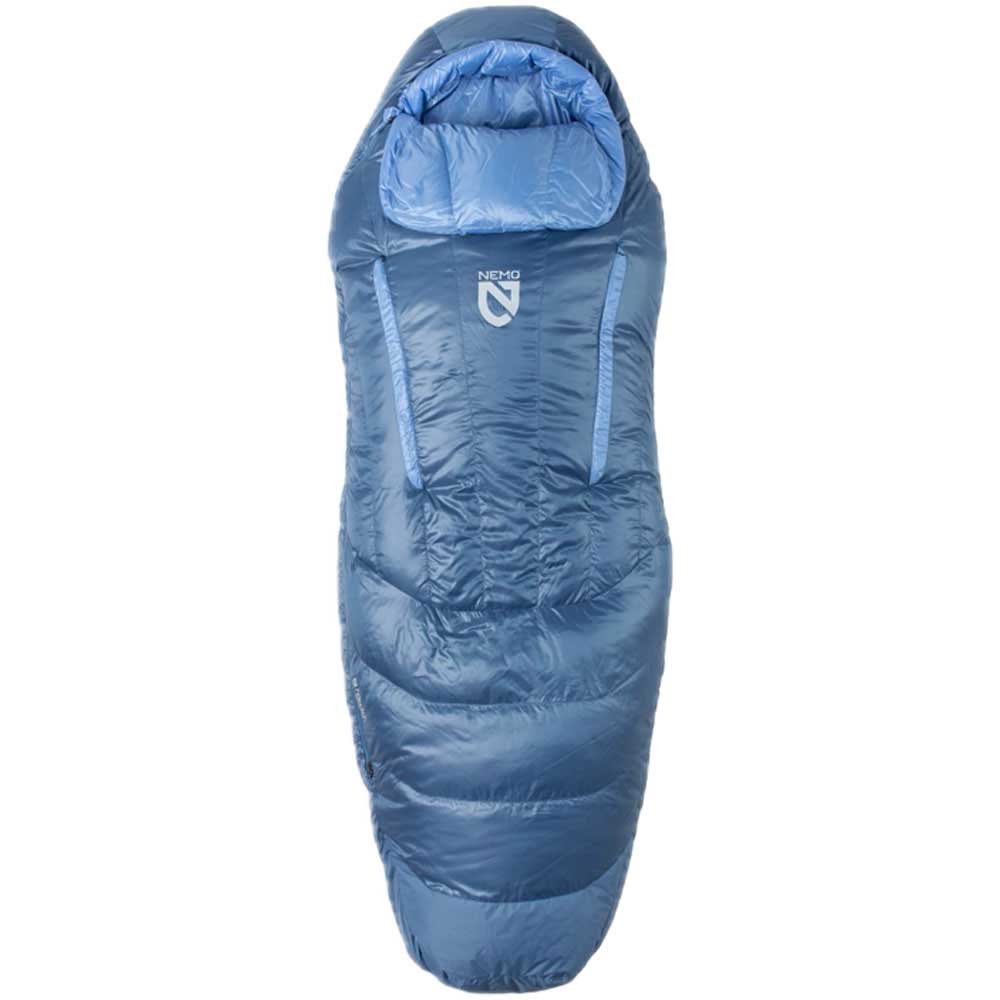
The NEMO Disco was built for side sleepers who are tired of fighting a standard mummy bag all night. The Spoon shape widens at the shoulders and hips to match how most people actually sleep, while staying as packable as any mummy on the market. Thermo Gill vents dump heat without full unzipping, the Blanket Fold draft collar seals in warmth when temperatures drop, and 650-fill hydrophobic down with PFAS-free DWR on the shell, liner, hood, and footbox keeps loft even in a damp tent. The Endless Promise construction means the bag is fully recycled and fully recyclable. Available in 15F and 30F for men, and 30F for women.
Key terms: Spoon shape is wider than a traditional mummy at the hips and knees, giving side sleepers room to move without losing insulation efficiency. Thermo Gill vents are zippered openings along the bag that let you dump body heat without unzipping the full zipper. Blanket Fold draft collar is an internal collar that seals around your shoulders to trap warmth on cold nights. PFAS-free DWR is a water-repellent finish that contains no per- and polyfluoroalkyl substances.
NEMO Disco 15 Men’s Endless Promise
Men’s
NEMO Disco 30 Endless Promise
Men’s
Women’s
Best for Car Camping: Big Agnes Echo Park
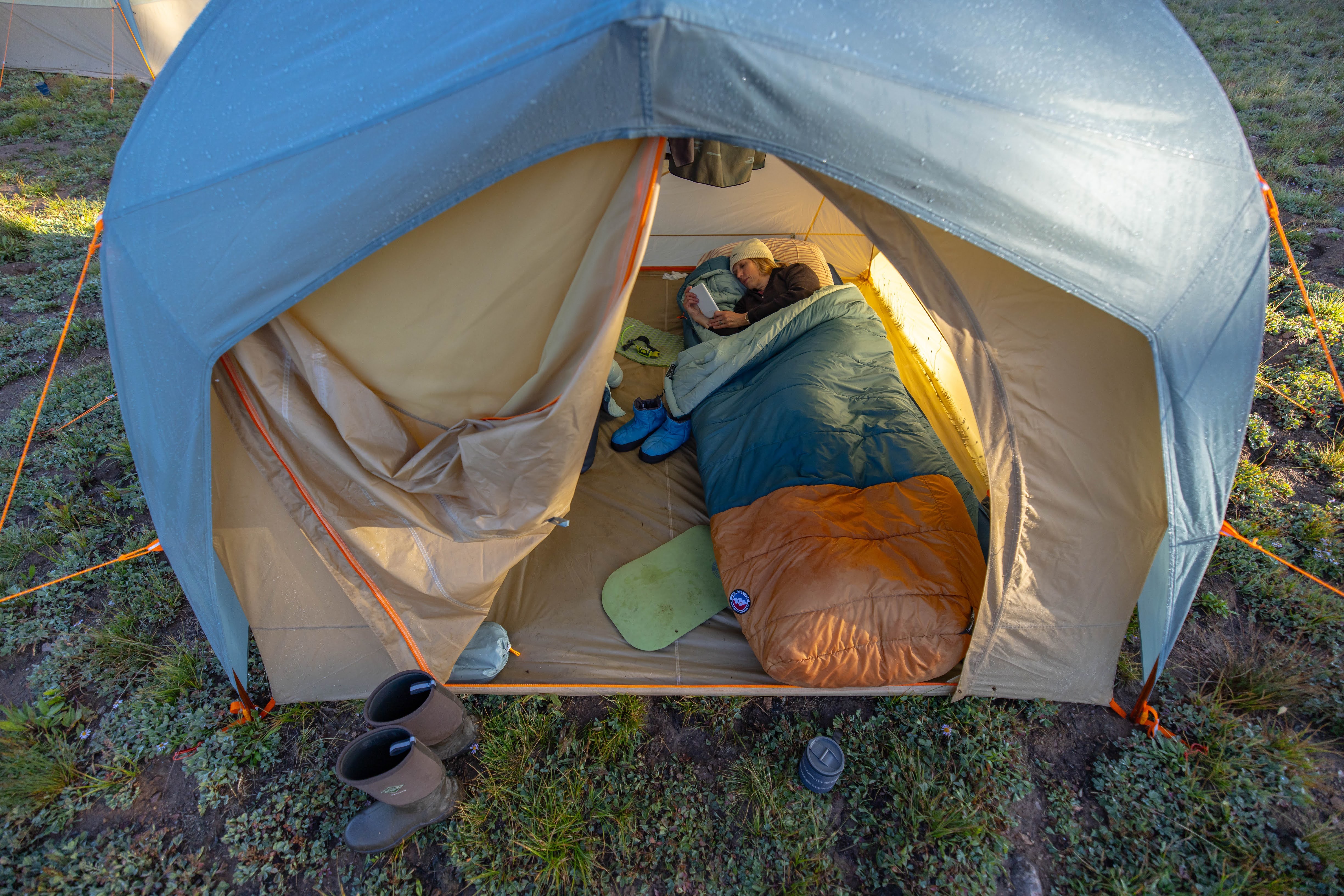
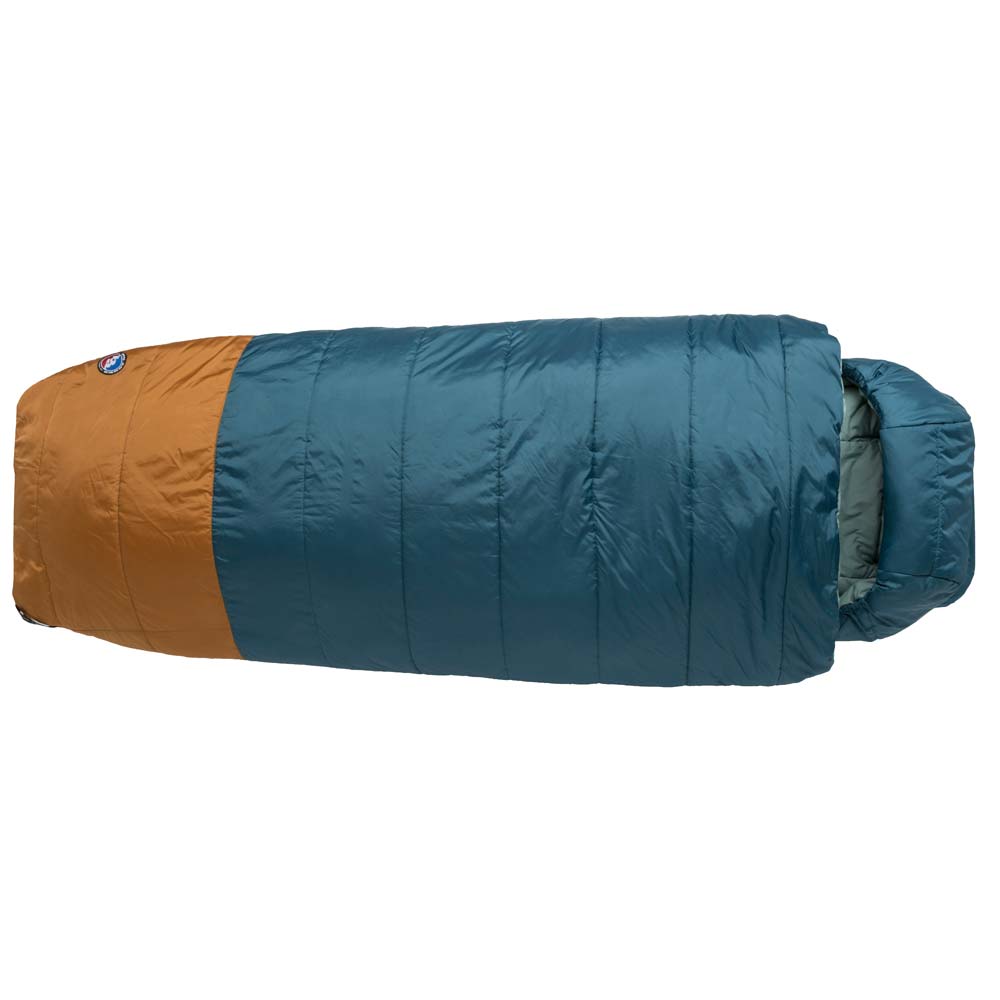
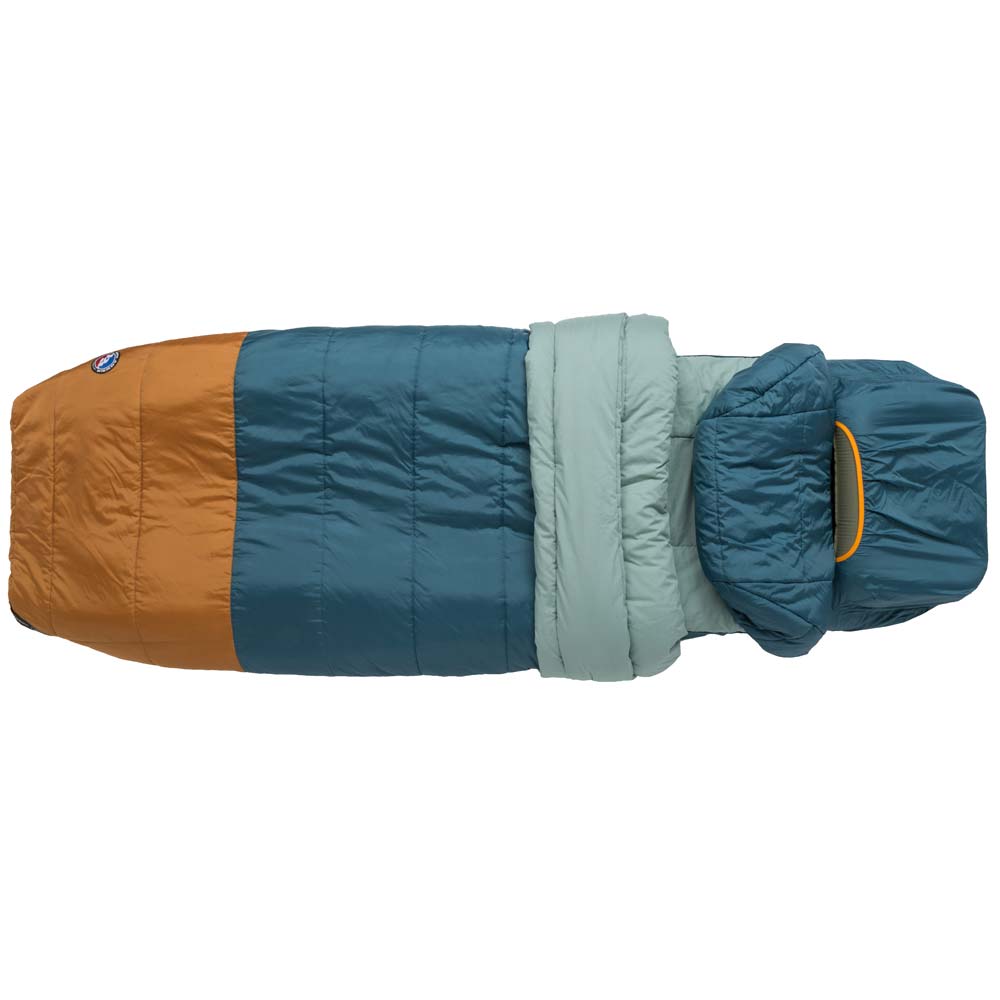
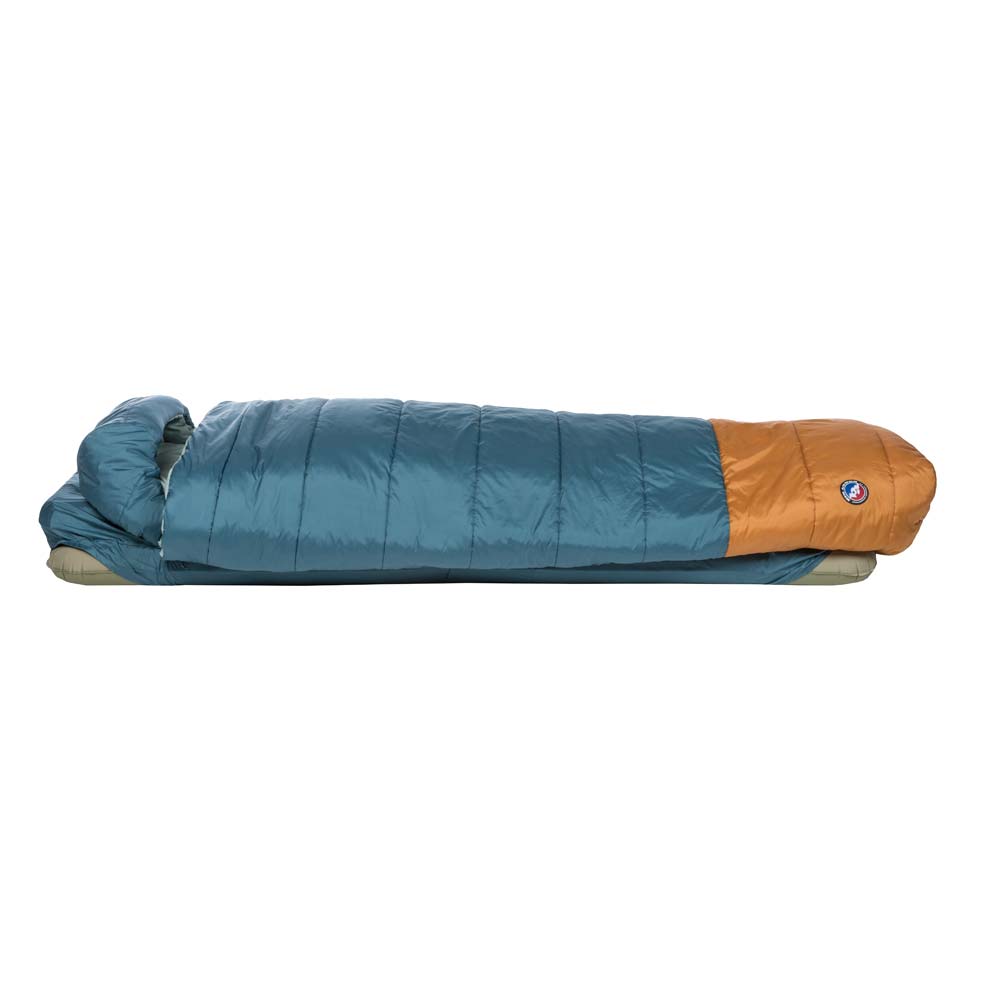
When weight does not matter and comfort does, the Big Agnes Echo Park is where you land. Fireline Max Eco 100% post-consumer recycled synthetic insulation stays warm even when your tent is dripping with condensation, a dual-zipper design lets you convert the whole thing into a flat backcountry bed on warm nights, and the cotton-poly lining feels more like a home comforter than a sleeping bag. The Padlok sleeve keeps your pad locked under you all night, and the Free Range Hood moves with your head so you stay covered when you roll over. Available in 35F for summer camping, 20F for spring and higher elevation, and 0F for early season or cold sleepers.
Key terms: Fireline Max Eco is Big Agnes’s proprietary synthetic insulation made from 100% post-consumer recycled materials. Synthetic insulation retains warmth when wet, making it a better choice than down for high-humidity environments or campers who expect condensation in their tent. The Free Range Hood is a baffled hood design that pivots with your head movements rather than pulling the whole bag out of position when you turn over.
Big Agnes Echo Park 35
Big Agnes Echo Park 20
Big Agnes Echo Park 0
Best for Couples: Big Agnes Dream Island 20
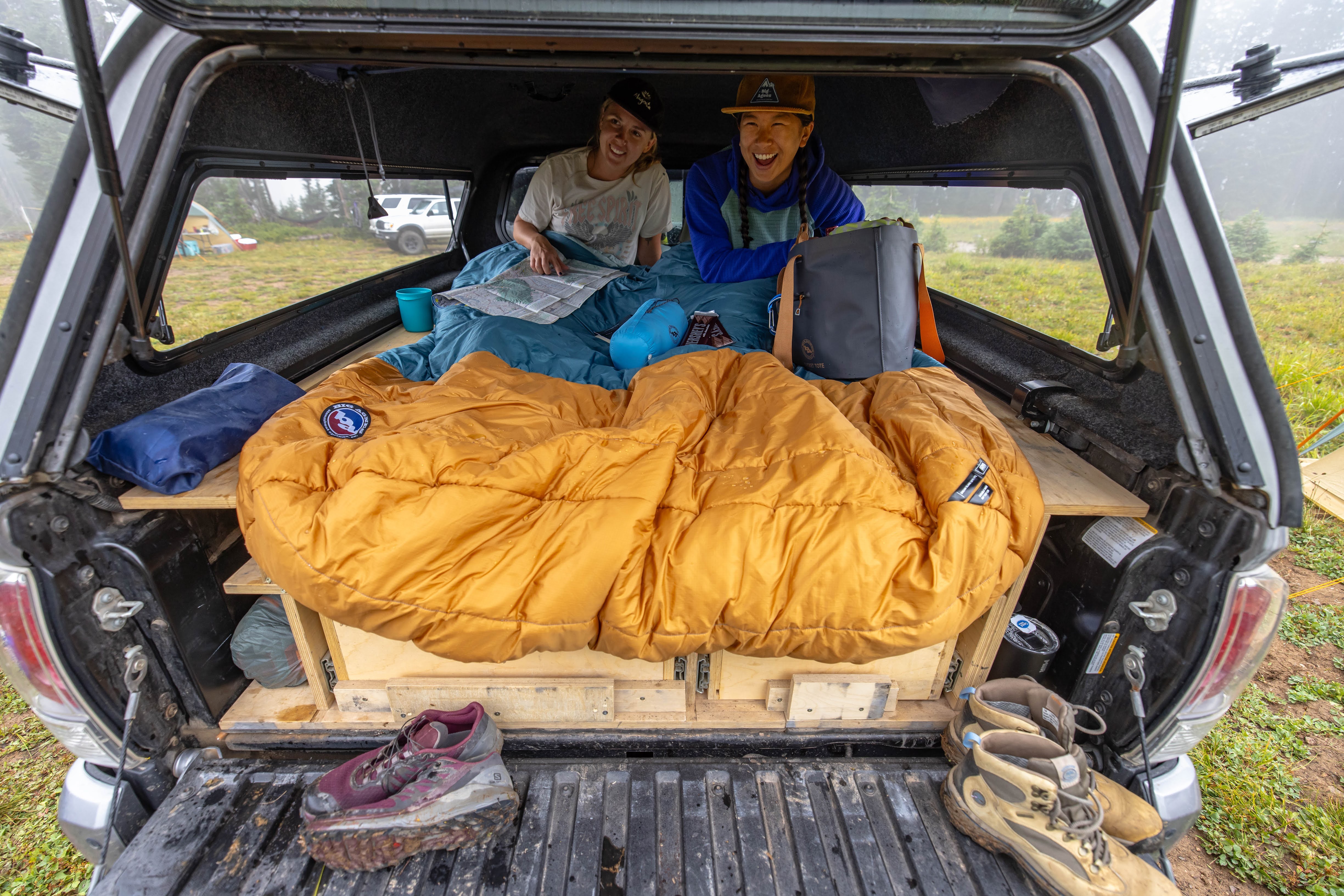
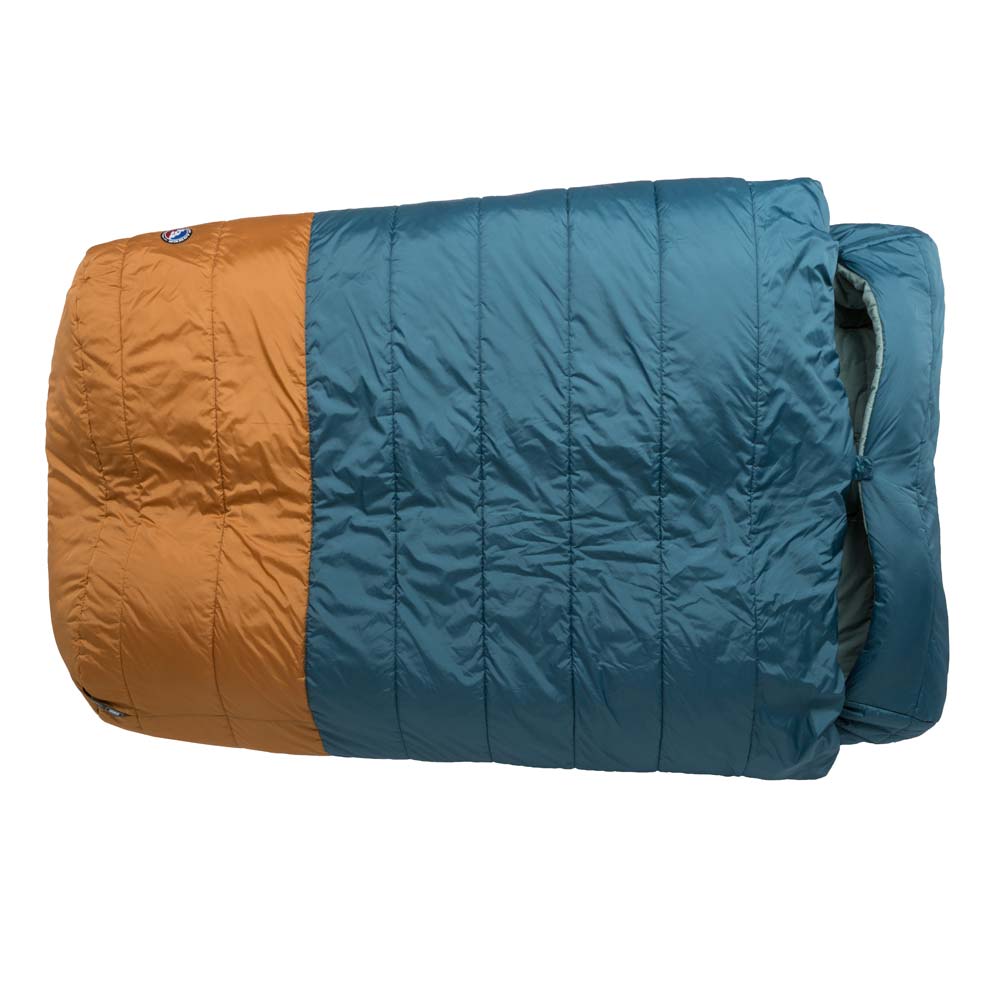
The Dream Island is a purpose-built double sleeping bag for two campers, not two mummy bags awkwardly zipped together. Rated to 20F with Fireline Max Eco 100% recycled synthetic insulation, independent zippers on both sides let either of you vent or adjust without disturbing the other, and unzipping both sides turns the whole setup into a flat quilt over a doublewide pad. The Padlok system fits one doublewide or two single pads totaling 60 x 78 inches, and the Pillow Barn sleeve holds two inflatable pillows. At 6 lb 13 oz this is a car camping bag, and a good one.
Key terms: Pillow Barn sleeve is a zippered pocket integrated into the top of the bag that holds inflatable pillows in place so they do not slide out overnight. Padlok system is a pad attachment sleeve sewn along the bottom of the bag that you slip your sleeping pad through, keeping you centered on your insulation all night instead of sliding off to the side.
Best for Kids: Big Agnes Little Red 20
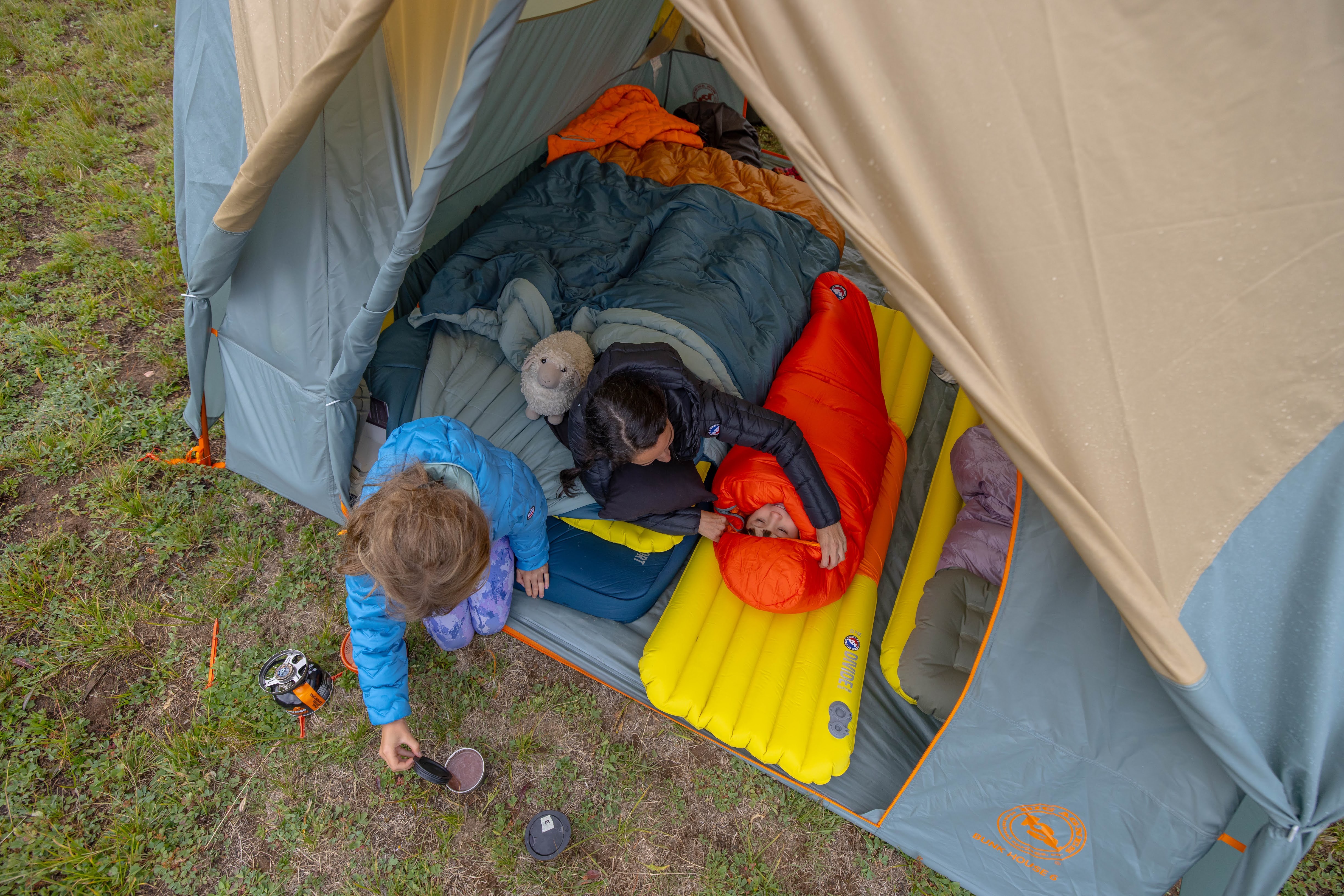
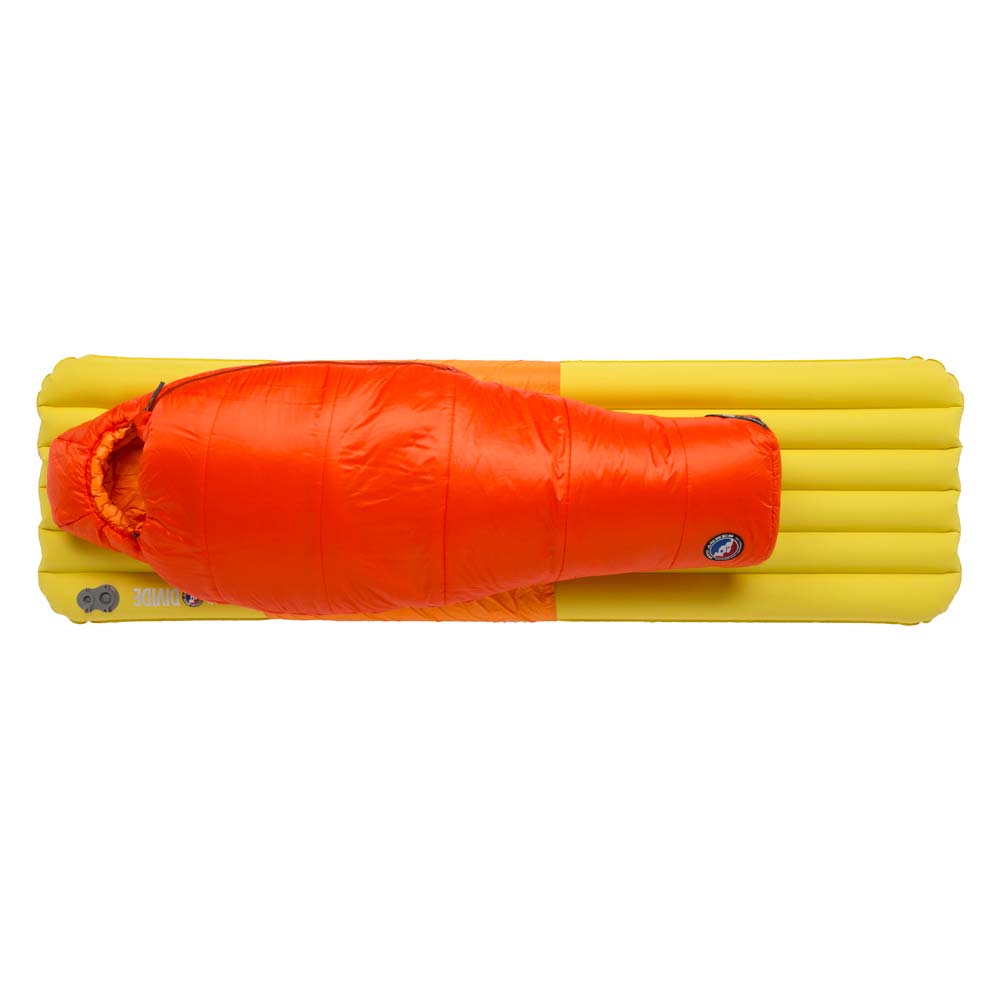
Cold kids do not sleep, and cold kids do not want to come back. The Little Red 20 is sized for children up to 4 feet tall, rated to 20F with Fireline Core Eco 100% recycled synthetic insulation that holds warmth even in a damp tent, and built with a contoured hood, draft collar, and zipper draft tube to keep heat in through all the nighttime spinning. The REM Storage Sleeve doubles as a stuff sack and fits sleeping pads of any length, which means one less thing to track at camp. At 1 lb 12 oz it is easy for kids to carry in their own pack and easy to pack when they forget to.
Key terms: Draft collar is an insulated tube sewn inside the bag near the shoulders that blocks cold air from entering around your neck. Zipper draft tube is an insulated baffle sewn behind the zipper that prevents cold drafts from seeping through the zipper teeth. REM Storage Sleeve is a stuff-sack pocket that attaches to the bag so storage and the bag travel together.
Frequently Asked Questions: Sleeping Bags for Summer 2026
What temperature sleeping bag do I need for summer camping?
For summer camping in most of the western United States, a 15F to 30F sleeping bag covers the widest range of conditions. At elevation — above 8,000 feet — nights regularly drop into the 30s and 40s even in July, so a 20F to 30F bag is a safer choice than a 40F or 45F bag. If you camp near sea level in warm regions, a 35F bag may be enough. Cold sleepers should size down by 5 to 10 degrees from whatever the forecast says.
What is the difference between down and synthetic sleeping bag insulation?
Down insulation offers more warmth per ounce and packs smaller than synthetic, making it the preferred choice for backpacking. However, down loses most of its loft when wet. Hydrophobic down treatments significantly reduce this weakness. Synthetic insulation retains warmth when wet, dries faster, and is typically less expensive, making it the better choice for car camping or high-humidity environments where condensation is likely.
What does fill power mean in a sleeping bag?
Fill power measures the loft of down insulation. A higher number means better-quality down that traps more air per ounce. A 650-fill down bag is a solid three-season option that balances warmth, weight, and cost. 800-fill and above is considered premium and used in ultralight backpacking bags. Fill power does not tell you how warm a bag is on its own, only the quality of the down inside it. Temperature rating, fill weight, and bag design all factor into warmth.
Should I buy a mummy bag or a rectangular sleeping bag?
Mummy bags taper from shoulders to feet, reducing dead air space to retain heat more efficiently. They are the best choice for backpacking and cold-weather camping. Rectangular bags offer more room to move and feel more like sleeping in a bed, making them better suited for car camping. Semi-rectangular and spoon-shaped bags like the NEMO Disco split the difference, offering mummy-like packability with more room at the hips and shoulders for side sleepers.
How do I choose the right sleeping bag for my kid?
Children run warm and move a lot in their sleep, but they are also less efficient at regulating body temperature than adults, so err on the warmer side rather than the cooler side. Size matters more than temperature rating for fit, since a bag that is too long creates a pocket of cold air at the feet. Look for bags with draft collars, zipper baffles, and contoured hoods. The Big Agnes Little Red 20 is specifically sized for children up to 4 feet tall and rated to 20F, which handles most summer camping conditions at elevation.
What is a modular sleeping bag system?
A modular sleeping bag system consists of two separate bags that zip together into one or can be used independently. The Big Agnes Lost Ranger 3N1, for example, includes a lightweight inner bag for warm nights and a semi-rectangular outer bag that adds insulation when temperatures drop. Together they cover a wider temperature range than a single bag, and separately they reduce weight for backpacking. This gives you one system that works from car camping to multi-night backpacking trips.
Get Out There Before Everyone Else Does
Winter ended early and the season is already moving. Pick the bag that matches your conditions and your crew, and get out before the trailheads fill up. All of these bags are in stock at Campman.com with free shipping on orders over $50.
About the Author
 Derek Newman
Born in the Wasatch, Derek has had an affinity for mountain life since day one. He was on skis the year he learned to walk, and as a high school graduation present he gifted himself rock climbing lessons. Nearly two decades later, Derek spends most of his time climbing up and/or skiing down most of the mountains around Salt Lake City, and he’s traveled around the world multiple times for the sole purpose of peak exploration. When he isn’t a man about camp, he’s working in Campman’s content marketing crew writing up blogs about backcountry skiing or rock climbing as well as describing products that he’s used personally. He’s climbed in most climbing shoes, toured on most backcountry skis, and ridden the resort on skis, snowboards, and even some evac sleds.
Share on: